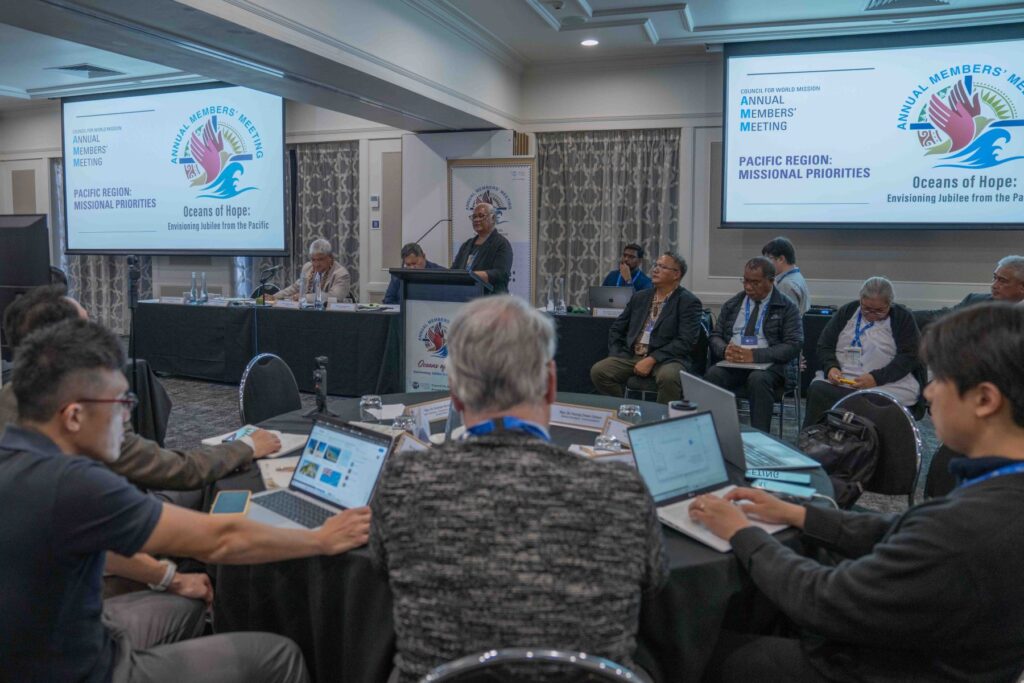
Delegates to the Council for World Mission (CWM) Annual Members’ Meeting (AMM) heard a powerful call from Pacific representatives to respond with urgency to the ecological, social, political, and economic challenges facing Pasifika communities.
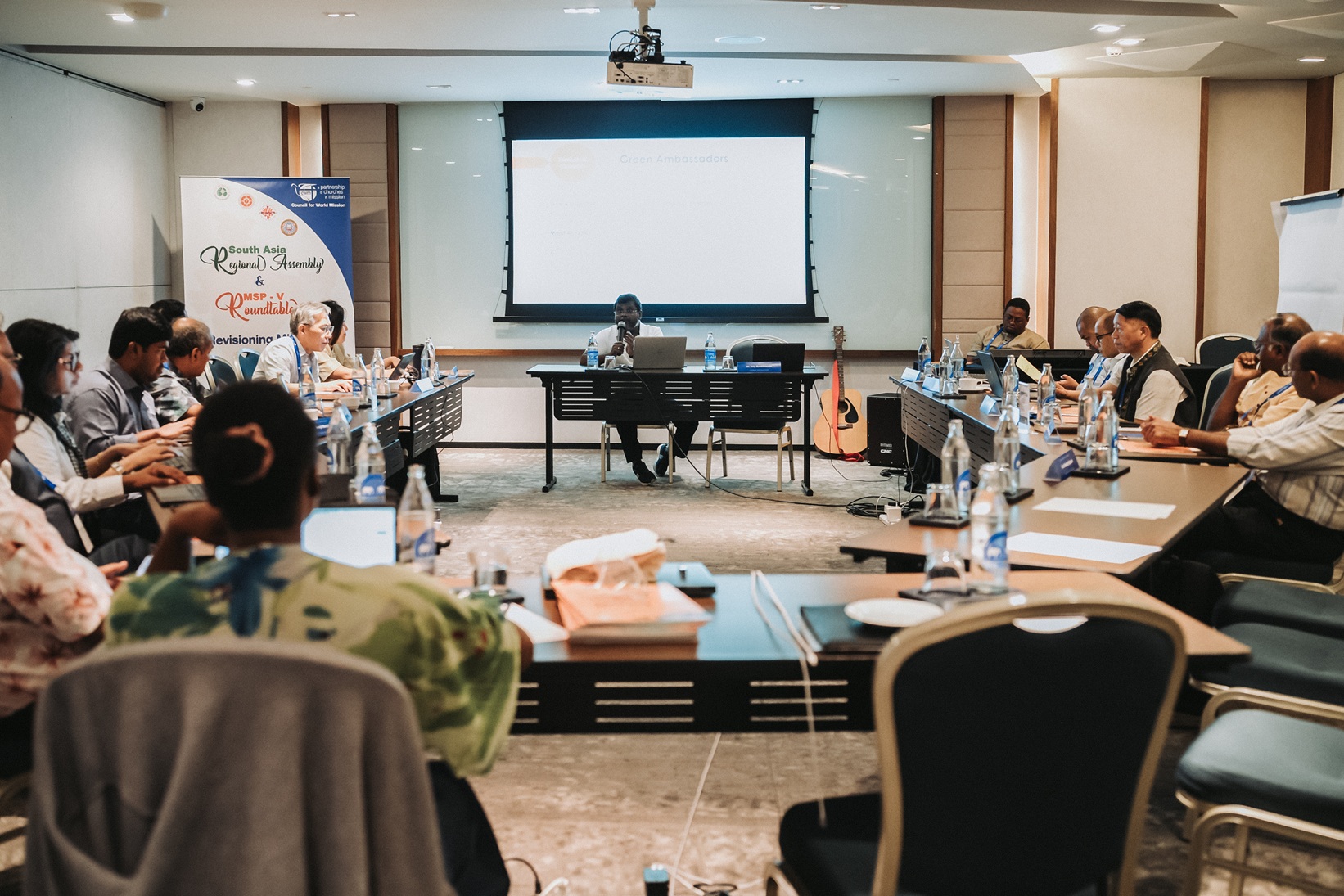
Moderated by Kenneth Tealava Ben of the Cook Islands Christian Church (CICC), the panel brought together five representatives from the Pacific region to reflect on self-determination, deep-sea mining, rising sea levels, capacity-building, and relocation.
Speaking on self-determination, Nehemia Tainanuarii, general secretary of the Etaretia Porotetani Maohi (EPM) Youth Organisation, reflected on the Pasifika Household of God as both a theological vision and a lived reality. He said Pacific churches and communities have long embodied this household through their struggles against colonisation, occupation, displacement, nuclear injustice, militarisation, ecological destruction, racial hierarchy, and the dismissal of Indigenous wisdom.
Tainanuarii called on churches to help build the future through faithful dialogue between the gospel and ancestral wisdom, forming leaders rooted in humility, restraint, courage, accountability, and care for the common good.
Rev. Garo Kilagi of the United Church in Papua New Guinea (UCPNG) described deep-sea mining as a matter of prophetic advocacy. He warned of the environmental, social, and economic risks of seabed extraction and called on the government of Papua New Guinea to uphold the moratorium on deep-sea mining, protect the Bismarck and Solomon Seas, and prioritise sustainable, community-centred development.
Kilagi also urged churches to speak with one voice in defence of the ocean as a sacred trust.
Addressing sea level rise, Maleta Kutimeni, secretary for mission of the Kiribati Uniting Church (KUC), said the crisis is already a lived reality for communities in Kiribati. She highlighted coastal erosion, higher tides, storm surges, flooding, saltwater intrusion, loss of freshwater sources, pressure on agriculture, and the need for relocation or adaptation in some areas.
Kutimeni stressed that sea level rise is not only an environmental issue but also a social, cultural, economic, and human concern affecting livelihoods, food security, health, education, infrastructure, identity, and heritage. She called for community resilience, global solidarity, reduced greenhouse gas emissions, and renewed commitment to climate justice.
Elder Faaeteete Saifoloi of the Congregational Christian Church in American Samoa (CCCAS) spoke on capacity-building and the continuing pillars of shared fellowship, including Reformed faith, congregational polity, Pacific contextual theology, justice, Jubilee, and ecumenical solidarity.
Saifoloi identified key capacity-building needs in climate response, diaspora ministry, theological education, pastoral care, financial sustainability, governance and administration, youth ministry, women in leadership, and gender balance.
Rev. Oliula Kalahati of Ekalesia Kelisiano Tuvalu (EKT) reflected on relocation as a missional and theological issue for Tuvalu, where rising sea levels are intensifying questions of land, identity, culture, and belonging.
Kalahati emphasised that relocation is not the first choice of Pacific peoples because land is more than territory. It is a sacred gift from God and the foundation of identity, culture, and faith. She said the priority must be to strengthen community resilience, support adaptation, and advocate for climate justice.
Recognising that migration may become unavoidable for some communities, Kalahati cautioned that any relocation must protect dignity, faith, culture, language, identity, and community. She called on Pacific churches to advocate for climate justice, accompany those facing displacement, deepen regional and global solidarity, and bear witness to hope and resilience.
Concluding the panel, Ben highlighted hope, inclusive leadership, and mission as renewal and justice as key themes emerging from the discussion.