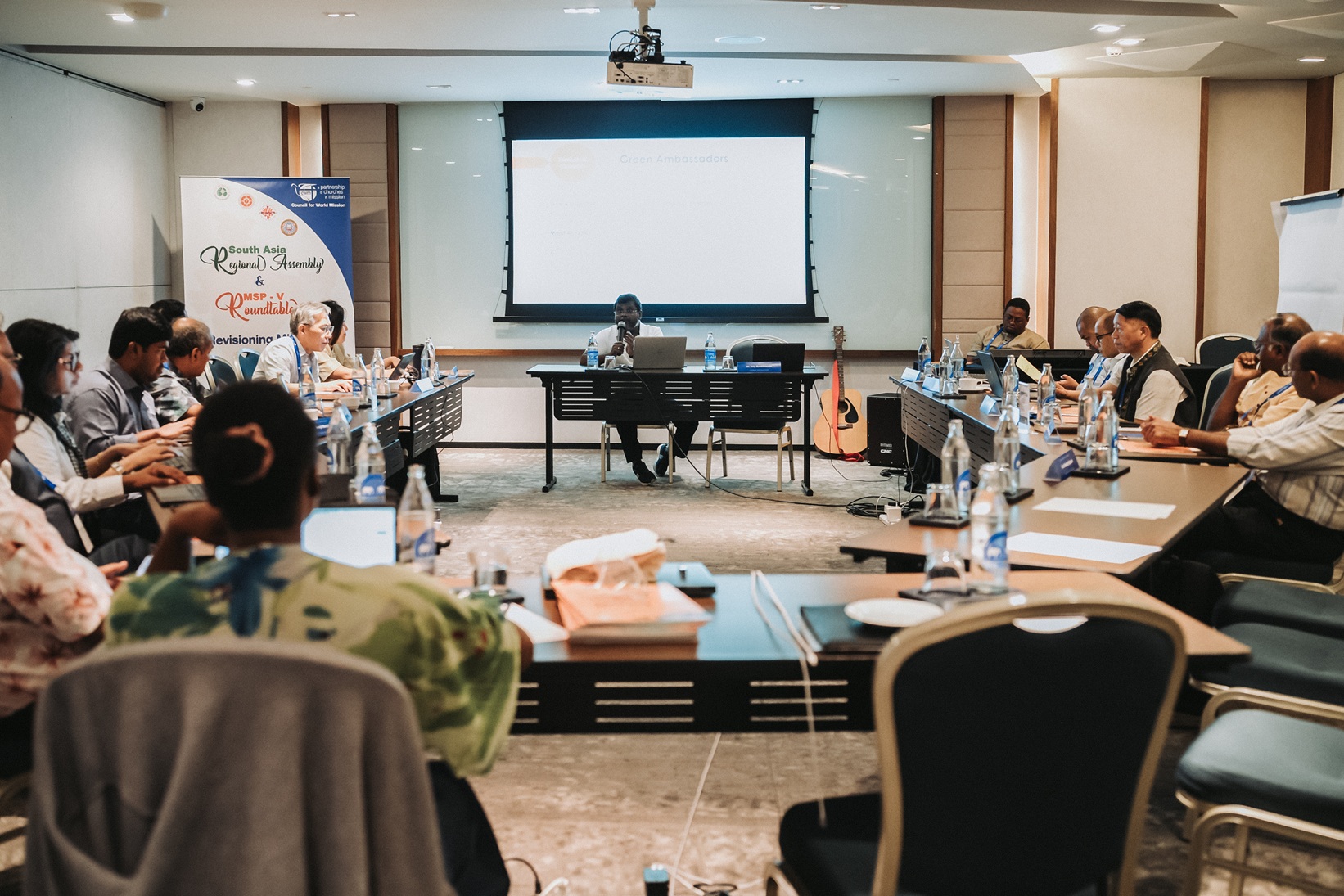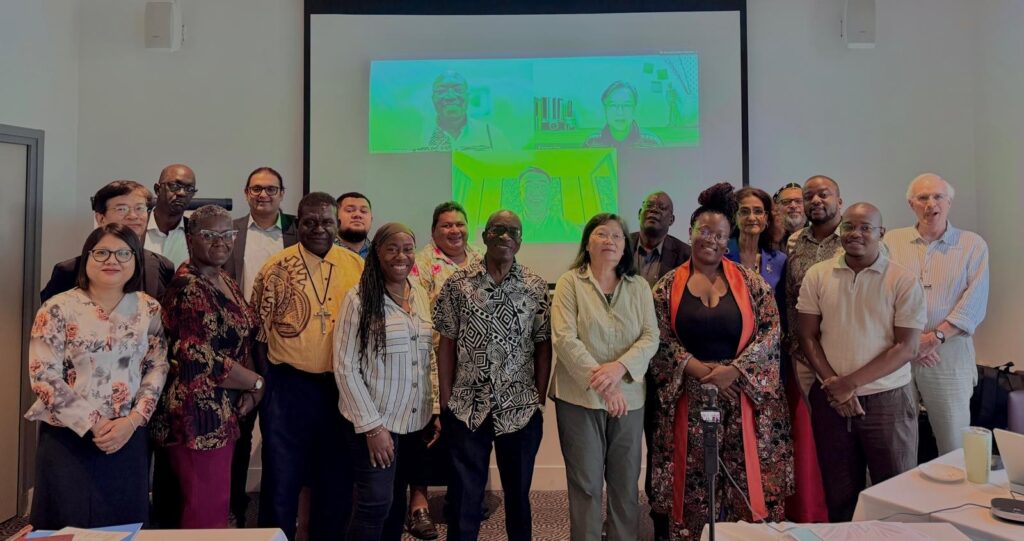
The Onesimus Project (TOP) core group gathered in Antananarivo, Madagascar, from 7 to 8 May to reflect on the future direction of the programme and its role in strengthening the Council for World Mission’s (CWM) global witness for reparative justice, truth-telling, and healing.
The meeting, chaired by Rev. Dr Roderick Hewitt, focused on reparative mission, decolonial theological formation, and transformative ecumenism. Participants reaffirmed the shared commitment of CWM and its partners to deepen prophetic witness, anti-racism advocacy, transformative mission practice, and decolonial theological education across member churches and communities.
Discussions also centred on how reparative justice can become more deeply embedded within the life and mission of CWM’s international partnership of churches as they participate in God’s redemptive and restorative mission in the world.
CWM General Secretary Rev. Dr Jooseop Keum joined the meeting online and reaffirmed the organisation’s commitment to reparative justice and mission from the margins with the margins.
“Member churches must move beyond symbolic remembrance toward concrete acts of justice, restoration, and communal healing,” Keum said.
Affirming the role of TOP amidst Jubilee
A major part of the meeting involved reviewing the progress made by TOP since October 2025. Participants reflected on the programme’s continuing development from a project into a broader missional movement.
Conversations focused on the four key pillars of TOP: Legacies of Slavery, Modern-Day Slavery, Education for Liberation, and Transformative Ecumenism.
Participants stressed the need for stronger accompaniment models, deeper theological engagement, and sustained grassroots participation to ensure the movement remains rooted in justice-oriented transformation rather than becoming merely a funding initiative.
Preparations for the CWM Jubilee in 2027 also formed an important part of the discussions. Members of the core group reflected on the significance of the organisation’s 50th anniversary and its connection to the biblical themes of liberty, dignity, restoration, and justice.
The group affirmed CWM’s prophetic role in proclaiming freedom and pursuing reparative justice as central expressions of God’s mission in the world.
Participants also acknowledged the growing international momentum surrounding discussions on reparations and welcomed opportunities for TOP to contribute to wider global conversations on justice, healing, accountability, and restoration.
TOP to be a part of UN reparatory justice conference
Rev. Wellington Mthobisi Sibanda, CWM coordinator for TOP, announced that TOP had been invited to serve as an advisory panel for a High-Level Next Steps Conference on Reparatory Justice in Accra, Ghana, from 17 to 19 June.
“The conference aims to establish a framework for reparations following the UN’s resolution on 25 March 2026 classifying the trans-Atlantic slave trade as a ‘gravest crime against humanity’ and will gather global leaders to discuss the next steps regarding compensation and accountability,” Sibanda said.
Addressing the regional synod of Iarivo Avaradrano
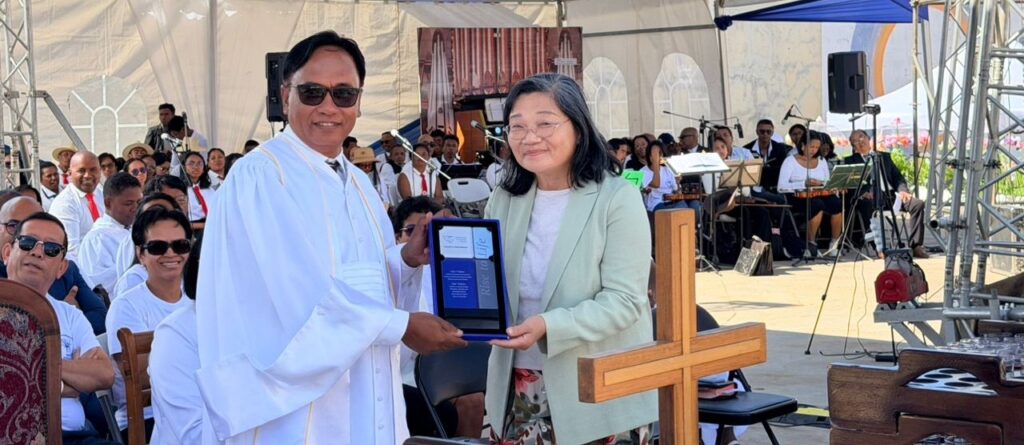
The TOP core group also attended the annual gathering and thanksgiving worship service of the regional synod of Iarivo Avaradrano at the Coliseum Antsonjombe in Antananarivo on 10 May.
Comprising 130 congregations, 21 schools, and more than 100 clergy members, the regional synod’s yearly gathering constituted an important occasion of collective worship, fellowship, thanksgiving, and spiritual encouragement for the various churches and institutions within the synod.
In her greeting to the congregation, CWM Moderator Dr Natalie Lin strongly reaffirmed the important role that the Church of Jesus Christ in Madagascar (FJKM) continues to play in the global CWM Christian family especially through its local work related to children’s ministry and social welfare.
“We are deeply moved by your ministry among children living in poverty and among orphans. Through schools, social workers, pastors, and faithful members, your church gives hope, care, and dignity to many vulnerable children and families,” Lin said.
Lin also highlighted FJKM’s commitment to sustainable agriculture and forest education, which reflects a deep respect for God’s creation.