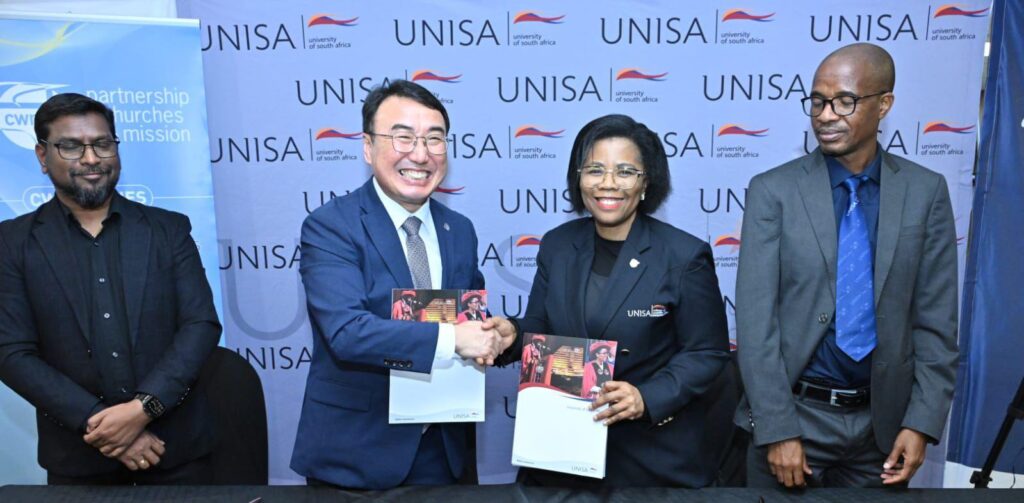
The Council for World Mission (CWM) and the University of South Africa (Unisa) have signed a Memorandum of Understanding (MOU) to establish a PhD programme in transformative mission. The agreement was formalised on 9 April, marking a significant step in developing future leaders in mission studies.
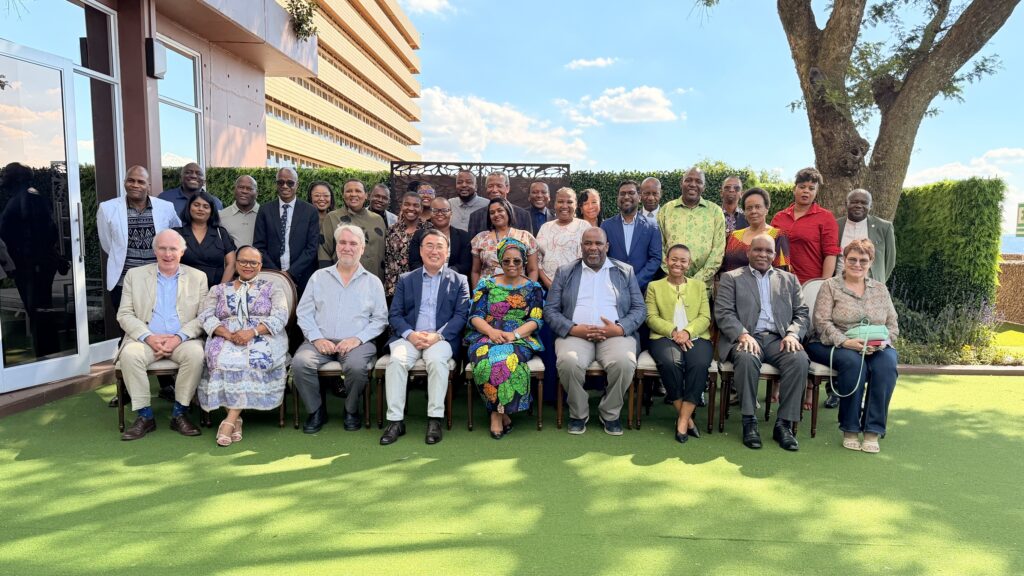
Hosted by Unisa Principal and Vice-Chancellor Prof. Puleng LenkaBula, the signing ceremony brought together leaders from the university’s Department of Christian Spirituality, Church History, and Missiology in the College of Human Sciences. The partnership aims to train and graduate 50 doctoral candidates over the next decade.
The programme will focus on equipping a new generation of global scholars in transformative ecumenism. It also plans to offer scholarships to support students who demonstrate academic promise and commitment to mission.
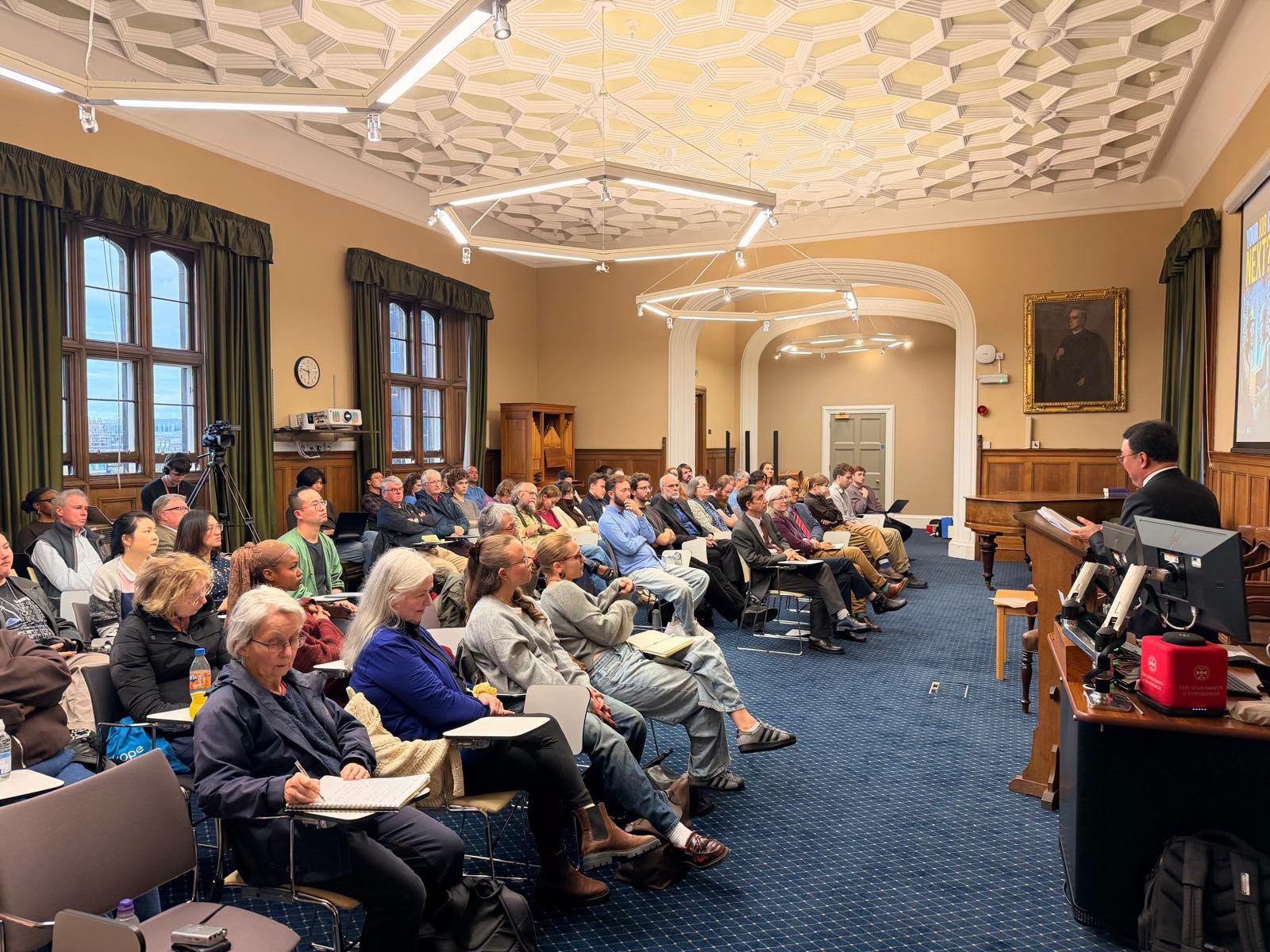
As part of the event, CWM General Secretary Rev. Dr Jooseop Keum delivered a public lecture titled “Eudaimopolitics vs. Necropolitics: Witnessing to radical hope in catastrophic times.”
Keum, a recipient of the Unisa honorary Doctorate of Philosophy in theology (honoris causa), described the present global context as “catastrophic,” pointing to growing inequality, conflict, and systemic injustice.
He highlighted the concept of “necropolitics,” first introduced by Cameroonian historian and political theorist Prof. Achille Mbembe, as a framework for understanding how political and economic systems determine who is allowed to live and who is left to suffer or die.
“Necropolitics offers one of the best analyses of today’s global crises,” he said, noting its relevance in explaining patterns of power, exclusion, and violence.
In contrast, he proposed “eudaimopolitics” as a vision of hope. Drawing on both the Korean concept of Gyeongse-Jemin (to manage the world and provide relief to the suffering people) and the Greek idea of eudaimonia (good spirits under a positive force), he described it as a model that promotes human flourishing and dignity. Unlike systems that treat people as threats or resources, eudaimopolitics seeks to create conditions where all can thrive.
Keum stressed that such a shift requires the church to reimagine its understanding of mission. He urged churches to move beyond outdated models and respond to the realities of today’s world with courage and creativity.
He described the new partnership between CWM and Unisa as a step towards nurturing theological leaders committed to justice, mutuality, and transformation.
In closing, Keum called for renewed commitment to hope and action. Reflecting on current global challenges, he said, “It seems history is moving backwards into the dark ages of our times.”
Yet he pointed to the enduring message of hope, echoing the words of Rev. Dr Martin Luther King Jr: “Let us not wallow in the valley of despair… even though we face the difficulties of today and tomorrow, I still have a dream.”