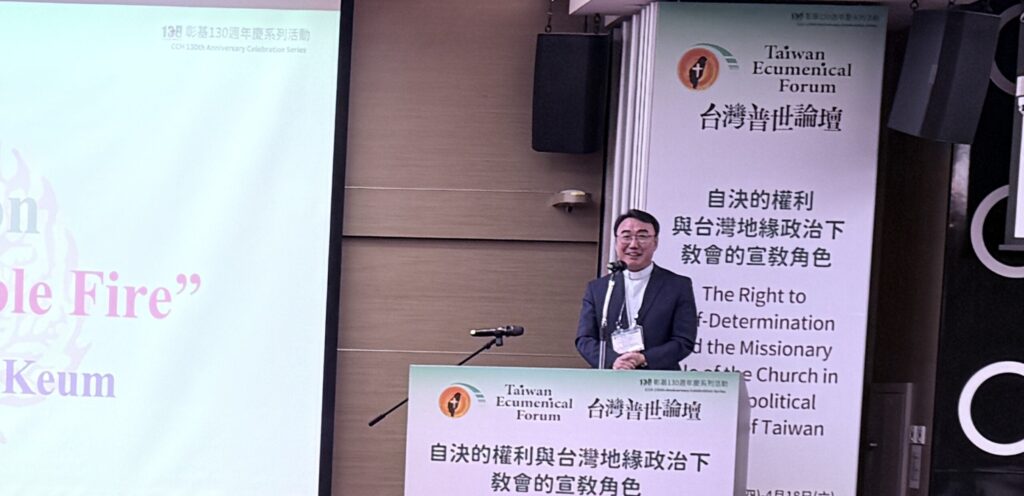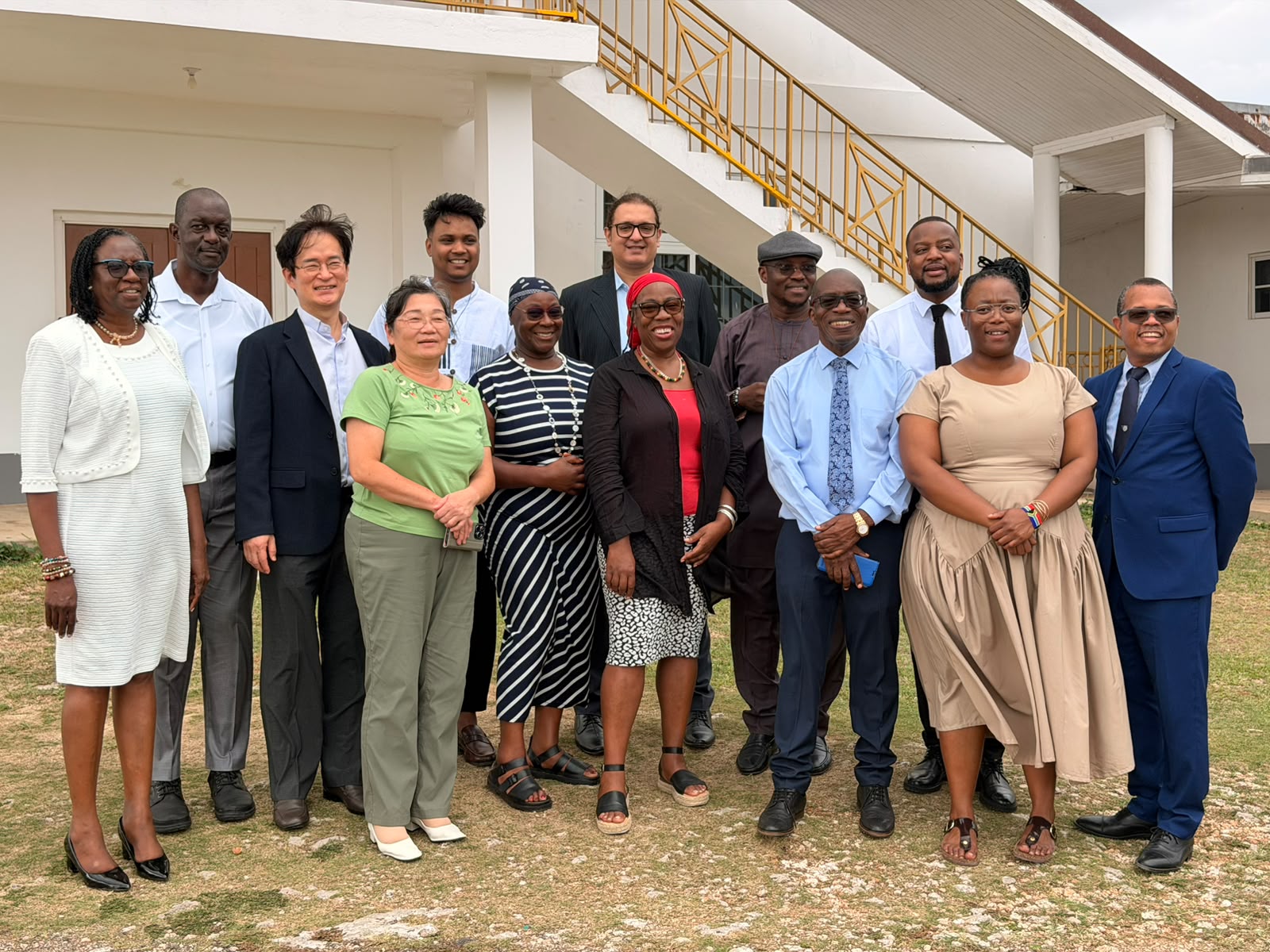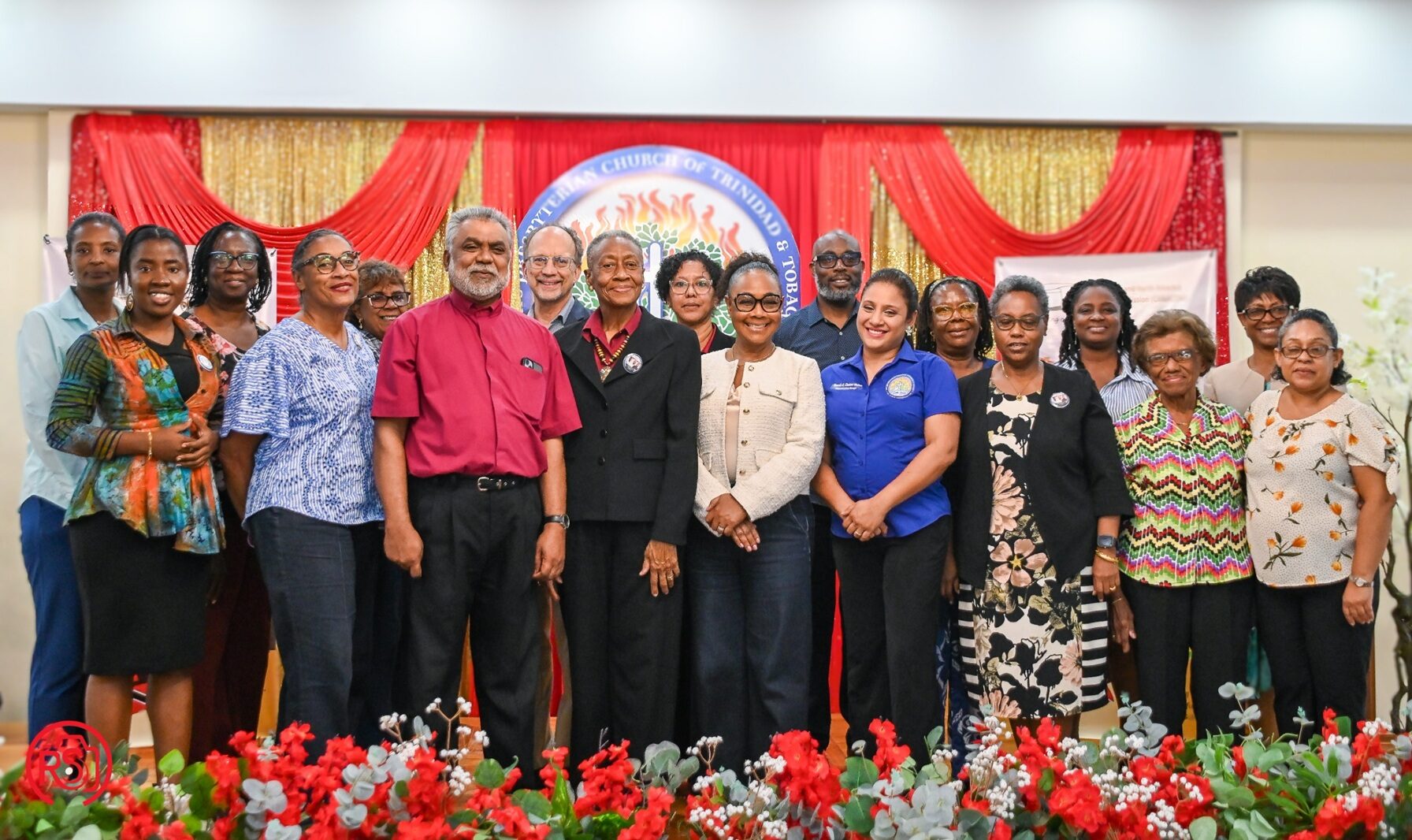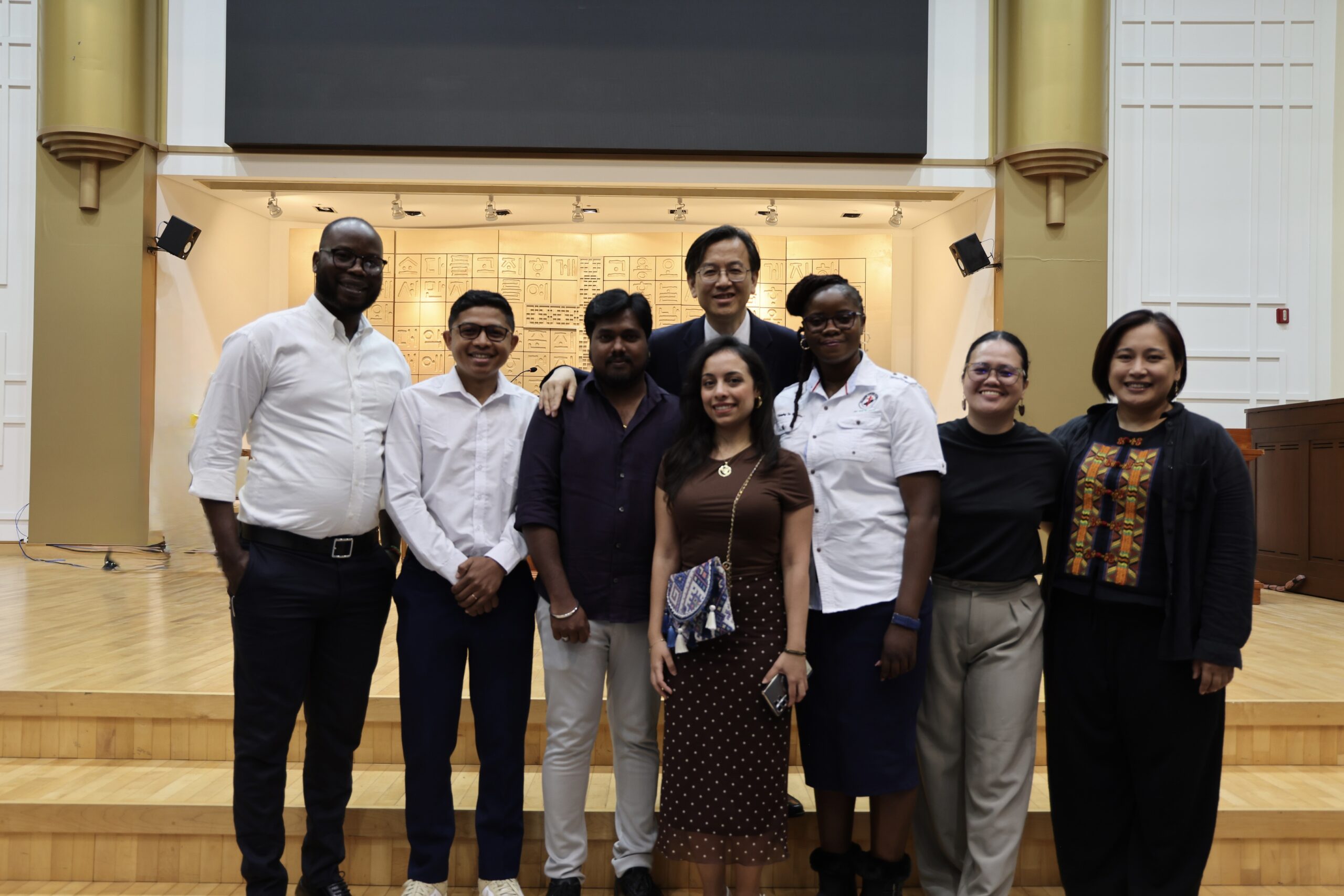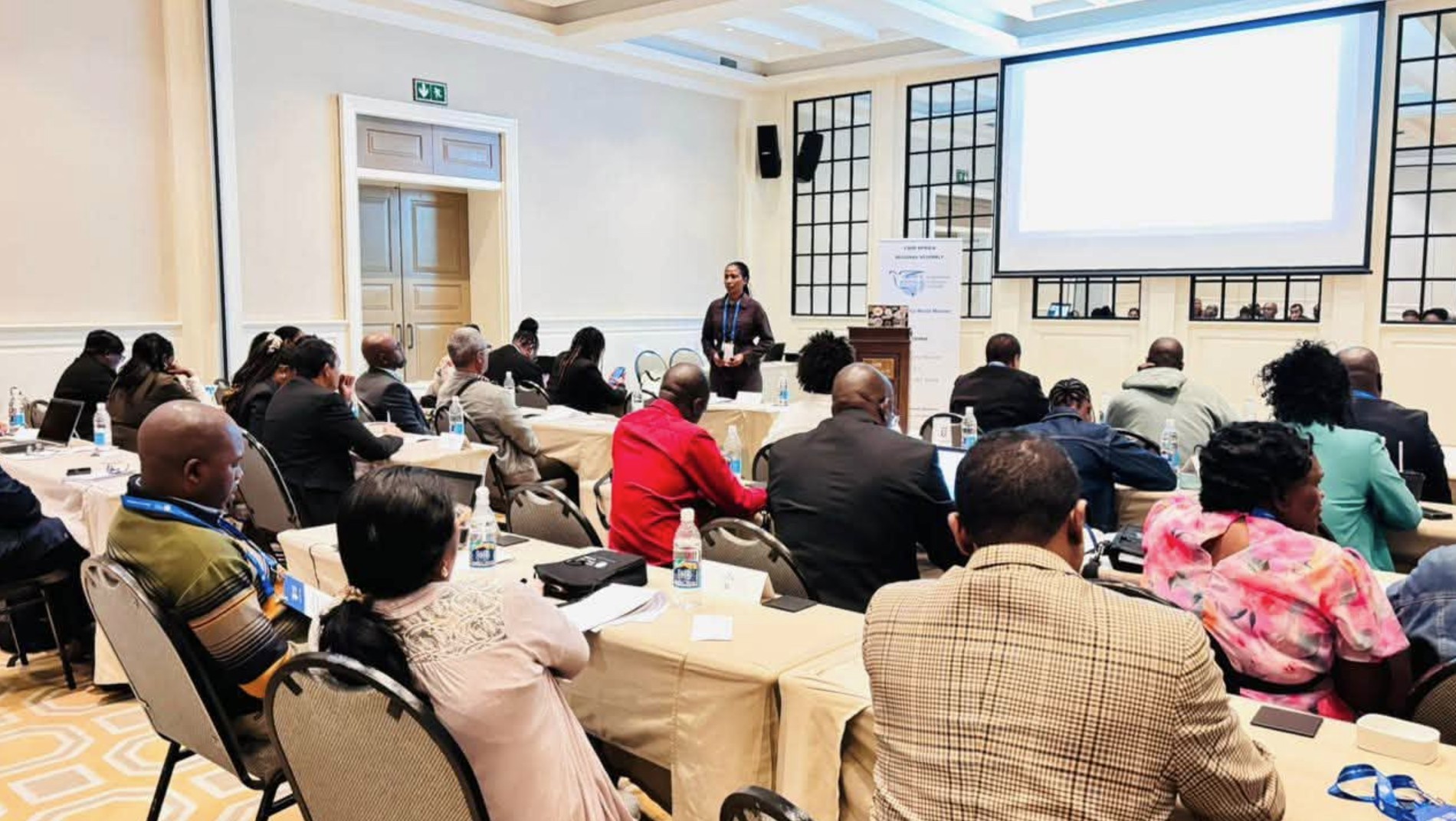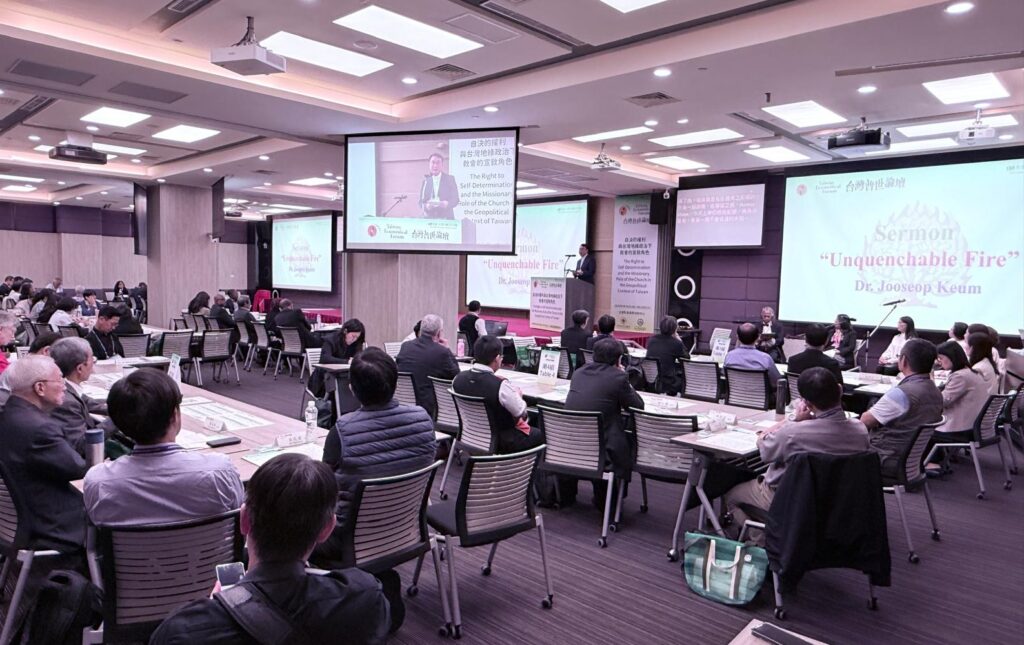
The Taiwan Ecumenical Forum (TEF) opened on 16 April at the Changhua Christian Hospital (CCH) International Education and Training Centre in Taiwan under the theme, “The Right to Self-Determination and the Missionary Role of the Church in the Geopolitical Context of Taiwan.” The gathering drew around 100 participants from over 20 countries, seeking to foster a shared ecumenical understanding and commitment among global churches to accompany Taiwan and its people in the pursuit of justice and peace.
The forum affirmed that self-determination is both a fundamental human right and a deeply theological concern. Rooted in the biblical affirmation of human dignity and freedom, the right of peoples to determine their own political, social, and cultural future reflects God’s intention for justice and peace among all.
Unquenchable fire
In his sermon at the opening worship, CWM General Secretary Rev. Dr Jooseop Keum emphasised that “the fire of God does not destroy but sustains,” calling participants to remain steadfast in faith and mission amid global challenges.
Preaching on the theme “Unquenchable fire” from Exodus 3:1–10 and Galatians 6:9, Keum reflected on the burning bush as a symbol of God’s enduring presence, one that empowers rather than consumes. While human effort can lead to burnout, he noted, the fire kindled by God renews and sustains.
Keum also drew on the life of missionary Frank Schofield, whose commitment to justice during Korea’s independence movement embodied this “unquenchable” spirit. He stressed the need to decolonise mission while preserving its liberating legacy, urging churches to pursue justice for all suffering humanity and creation.
He concluded by calling on TEF participants to deepen global partnerships and solidarity for the life-flourishing of Taiwan through self-determination.
Keynote address: self-determination in Taiwan
In his keynote speech, “Divine Sovereignty and the Right to Self-Determination,” Rev. Dr Huang Po-Ho, director of the Academy for Contextual Theologies in Taiwan, argued that self-determination must be understood not only as a political issue but also as a deeply theological concern rooted in God’s sovereignty and human dignity.
He highlighted Taiwan’s complex history of colonisation and its ongoing struggles over identity and freedom. Huang emphasised that the Taiwanese people’s pursuit of self-determination reflects a broader theological vision in which communities participate responsibly in shaping their future under God’s reign.
The keynote also underscored the church’s role in advocating justice and standing in solidarity with marginalised communities. Huang urged churches worldwide to adopt people-centred approaches that prioritise dignity, culture, and shared responsibility over political power.
He concluded by calling for deeper ecumenical cooperation, stressing that self-determination is both a theological vocation and a sign of God’s liberating work in the world.
CWM Moderator Dr Natalie Lin noted that the forum provides a vital platform for the voices of the Taiwanese people to be heard and recognised as an integral part of God’s mission for justice and peace.
Running until 18 April, the forum will engage participants in in-depth discussions on Taiwan’s current context, as well as the mission and role of the church in accompanying Taiwan on its journey toward justice and peace.
Click here to download the Communique.