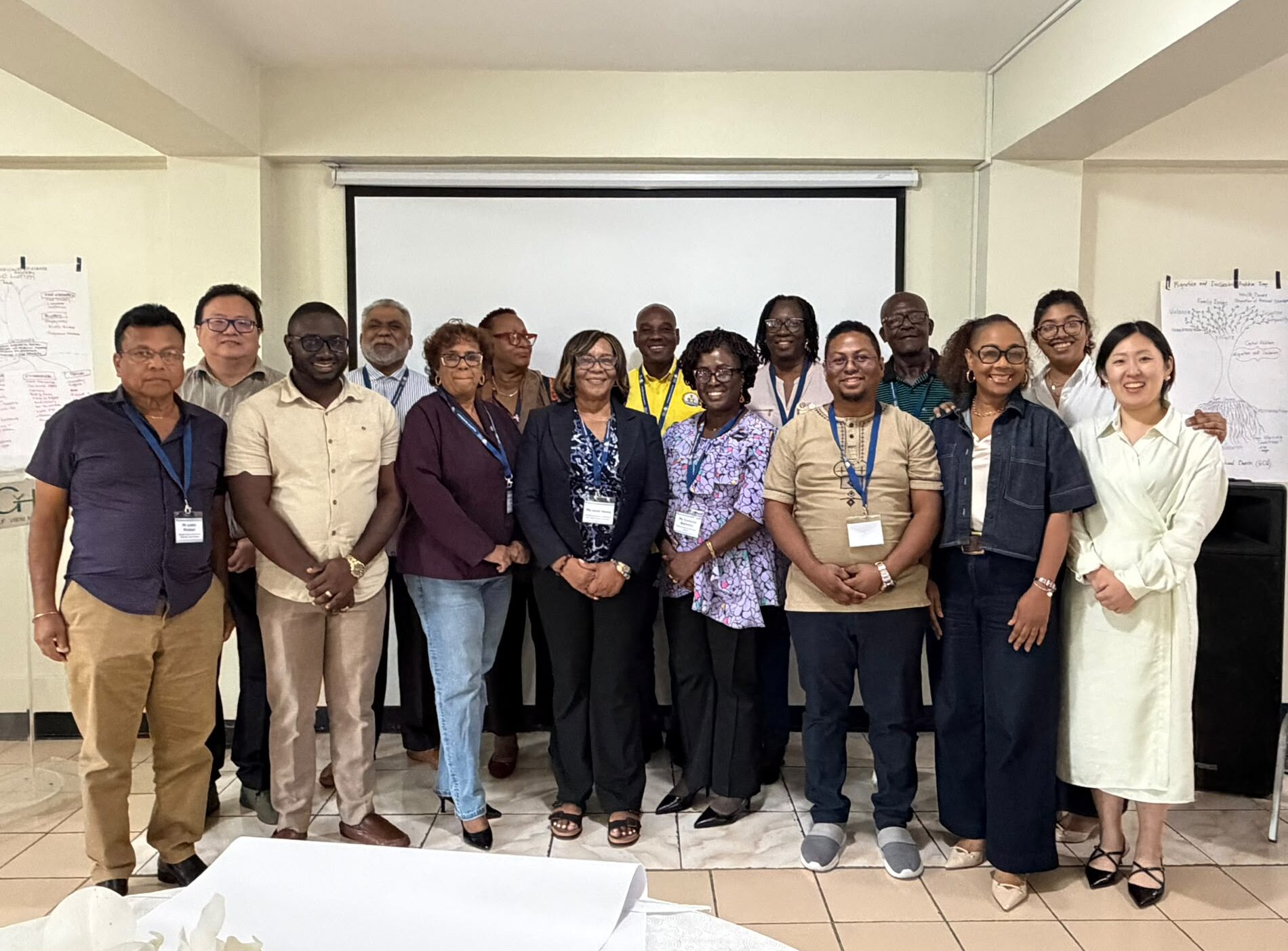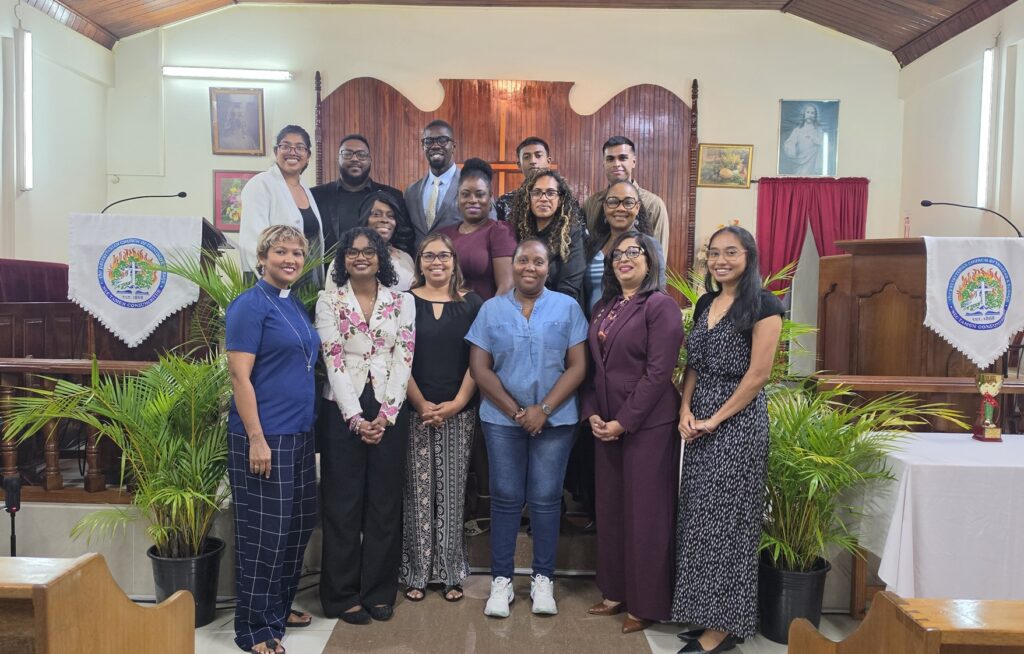
Fifteen participants from the Council for World Mission’s (CWM) three Caribbean member churches gathered in Trinidad and Tobago from 9-12 November for a Social Advocacy Training Programme aimed at strengthening churches’ capacity to develop and implement effective advocacy strategies and contextually relevant initiatives addressing justice issues at community and national levels.
Hosted by the Presbyterian Church of Trinidad and Tobago (PCTT), the programme brought together ministers, student ministers, and lay participants from PCTT, the United Church in Jamaica and the Cayman Islands (UCJCI), and the Guyana Congregational Union (GCU).
Biblical call to liberation from the margins
Beginning with a worship service at Santa Cruz Presbyterian Church on 9 November, the gathering invited participants to reflect on the church’s prophetic responsibility to speak against injustice and stand alongside communities experiencing marginalisation.
CWM Mission Secretary for Social Justice and the Caribbean Janet McConnell described the training as a sacred call to member churches towards transformative leadership.
“This Caribbean Social Advocacy Training is a sacred call that challenges each of you to be transformative leaders in your context,” McConnell said, drawing on Luke 4:18 and Christ’s proclamation of Jubilee as good news of liberation for the poor and oppressed.
The advocacy training was led by Sherna Alexander, whose experience in social advocacy in Trinidad and Tobago strengthened participants’ knowledge and skills in critical social analysis, strategic advocacy, community mobilisation, and policy engagement.
Rev. Sanya Beharry of PCTT provided theological reflection and chaplaincy throughout the programme, helping participants connect their faith with the varied realities confronting Caribbean communities.
Translating complex social concerns into actionable responses
Through interactive exercises, including the Power Flower and River of Life, participants examined how personal experiences, social identities, and structures of privilege and exclusion influence their understanding of justice.
A Human Library Immersion brought participants into conversation with local advocates, offering firsthand insights into the challenges of sustained community organising and the importance of solidarity.
Discussions addressed pressing regional concerns, including gender-based violence, housing insecurity, child safeguarding, unequal educational opportunities, and ecological protection.
Participants were encouraged to move beyond identifying broad social problems towards developing focused advocacy initiatives capable of influencing policy and addressing structural inequalities.
Practical sessions explored evidence gathering, community consultation, stakeholder mapping, resource mobilisation, and accountability. Particular attention was given to anticipating emerging challenges and developing proactive responses before crises deepen.
Sustaining collaboration across the Caribbean
By the end of the training, each participant had identified and refined an advocacy priority relevant to their church and community, receiving feedback from fellow participants to strengthen their proposed actions.
The programme concluded with Holy Communion and a closing service that included a litany of affirmation and commitment, renewing participants’ dedication to upholding human dignity and translating Christian witness into practical action.
Participants committed themselves to reviewing existing advocacy structures within their churches or establishing new ones, engaging church leadership, and developing initiatives grounded in local realities.
They also pledged to sustain collaboration and shared learning across the Caribbean.
As CWM journeys towards its Jubilee in 2027, the programme affirmed the importance of strengthening a global partnership rooted in solidarity, belonging, shared purpose, and prophetic action for justice.