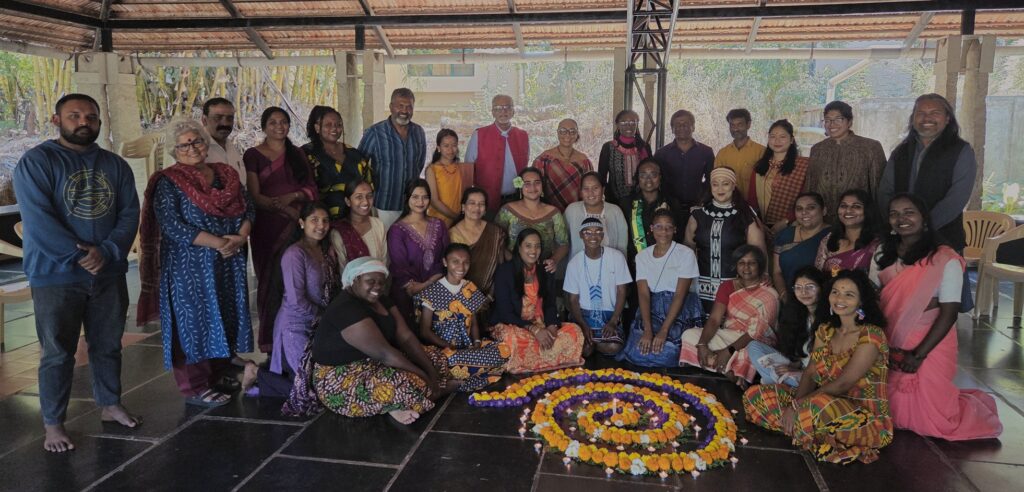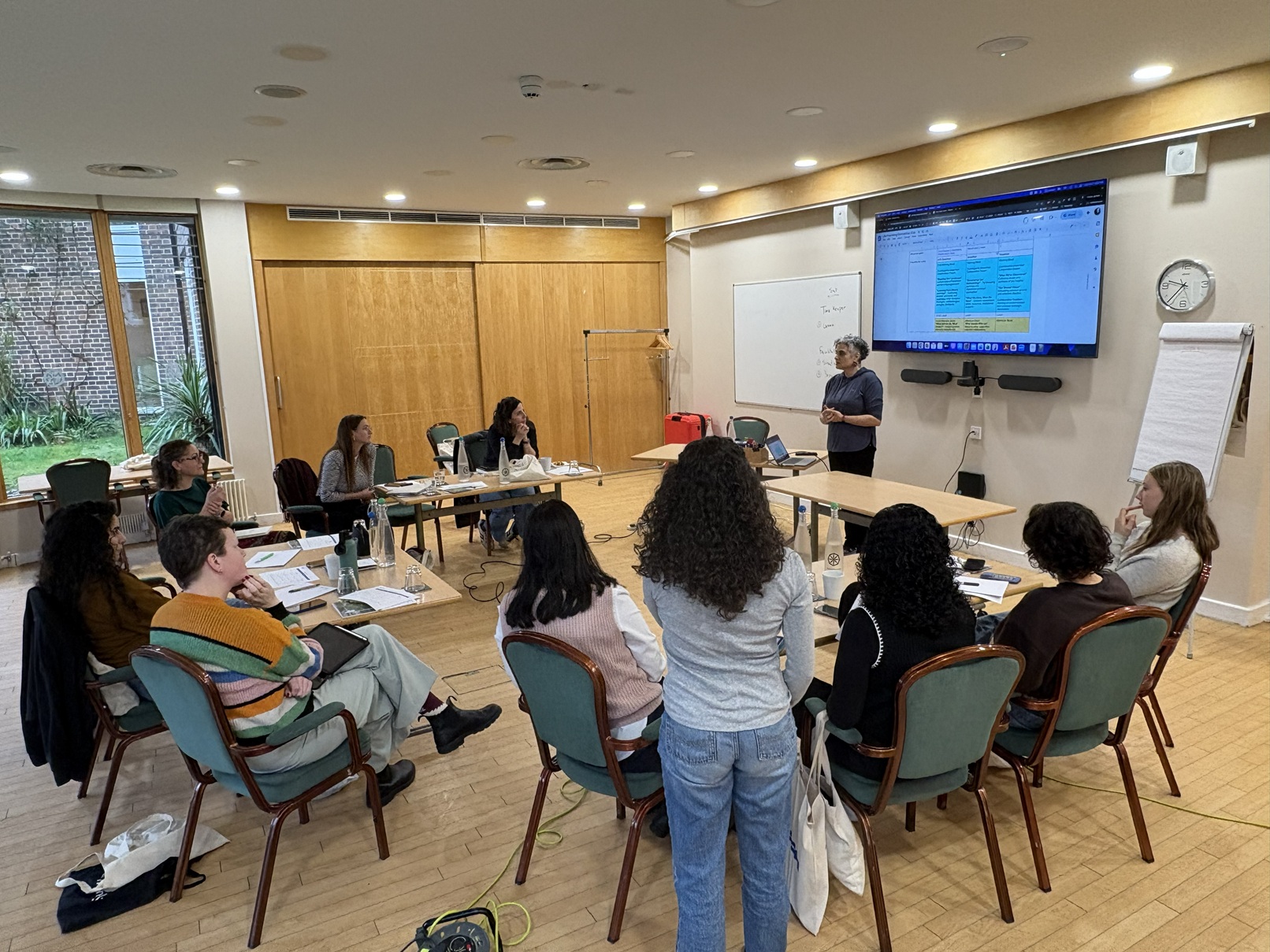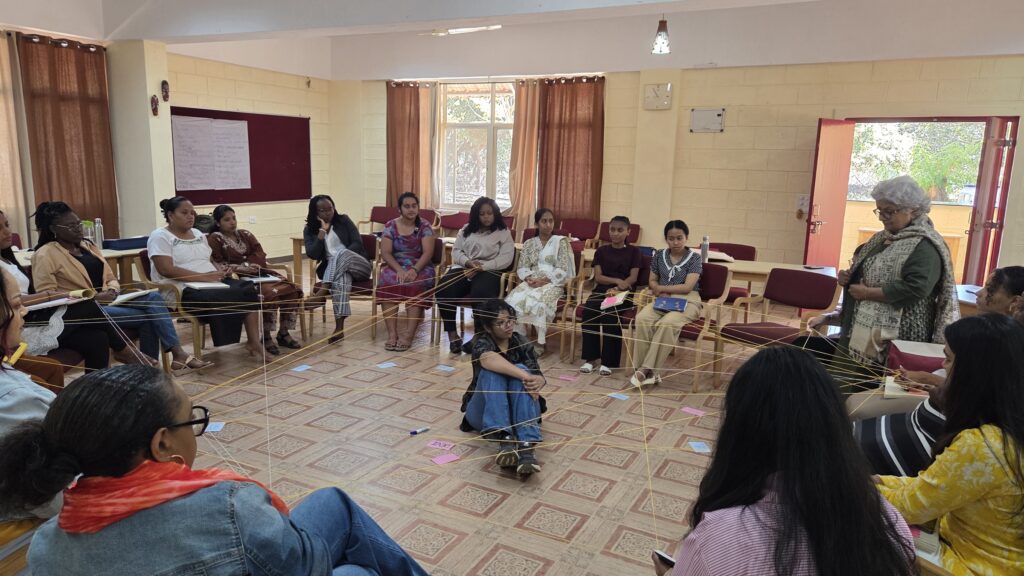
Nineteen young women ages 21-35 from member churches of the Council for World Mission (CWM) across four regions — Africa, the Caribbean, South Asia, and the Pacific — gathered for a Gender, Diversity, and Transformative Leadership course to explore feminist theology and leadership.
The course, part of the Young Women Enabling Transformation programme, took place from 4-28 February at Visthar Academy in Bangalore, India. It offered a curated learning journey that created space for culturally diverse participants to confront the deeper roots of injustice while nurturing a collective vision for equitable female leadership in church and society.
Contributing to the growth of women faith leaders
Reflecting on the course’s practical and action-oriented focus, Janet McConnell, CWM mission secretary for social justice, said the growth she witnessed among the participants reflected a key objective of the Young Women Enabling Transformation programme: to stimulate the emergence of confident, courageous, and transformative women leaders across the CWM communion.
“What we witnessed was nothing short of transformative,” McConnell said. Throughout the programme, she encouraged participants to “remain faithful to the call of transformative leadership and to champion structural transformations that confront and dismantle systemic inequities.”
Culturally rich experience
The programme reclaimed biblical theology as a foundation for gender justice. Through contextual analysis of the story of Hagar, Sarai, and Abram, as well as retelling and recovering the voices of unnamed women in the Bible, participants explored how feminism and faith can inform and strengthen one another.
This approach affirmed that the pursuit of justice is central to the calling of women as transformative leaders within church and community.
“Theology stopped being something I studied — it became something I witnessed,” said Lerato Mfunda, who represented the Uniting Presbyterian Church in Southern Africa. “I saw poverty, patriarchy, faith, and dignity as things that lived together.”
Participants also examined issues such as disability and ableism, children’s rights, and the Devadasi system and its colonial appropriation. Practical tools including gender mainstreaming, policy advocacy, restorative justice, and inclusive facilitation equipped participants not only to analyse injustice but also to respond strategically within their contexts.
Beyond classroom learning, participants visited Ulsoor Lake, the Bangalore State Library, the Parliament building, and the High Court. These visits included discussions on pre- and post-colonial realities and reflections on the contributions of the architect of the Indian Constitution, deepening participants’ understanding of governance, justice, and structural transformation.
Participants also engaged in interfaith encounters within the Indian context, reflecting on the role of religion and culture in shaping power dynamics.
A ripple effect for transformative leadership
A graduation ceremony held on 27 February marked not only the completion of the course but also the commissioning of young women into transformative leadership within their churches and communities.
Participants, organised into regional groups, presented reflections on their learning journeys, personal transformation, and collective vision for advancing gender justice in their contexts.
“The transformative leadership course shaped me because it taught me that powerful faith leadership does not only confront injustice but also examines the redistribution of power,” said Hanitriniaina Eva Jessica of the Church of Jesus Christ in Madagascar.
McConnell emphasised that the significance of the Young Women Enabling Transformation programme lies in its ripple effect.
“It strengthened theological grounding, sharpened analytical tools, and deepened commitment to justice,” she said. “It also forged a global community of women leaders committed to creating gender-just, inclusive, and equitable spaces.”
As part of post-course developments, McConnell unveiled plans to publish and distribute participant-developed resources for use across CWM member churches and communities. The programme is also preparing to launch a magazine that will serve as a platform for advocacy, storytelling, and amplifying the visibility of young women’s transformative leadership.