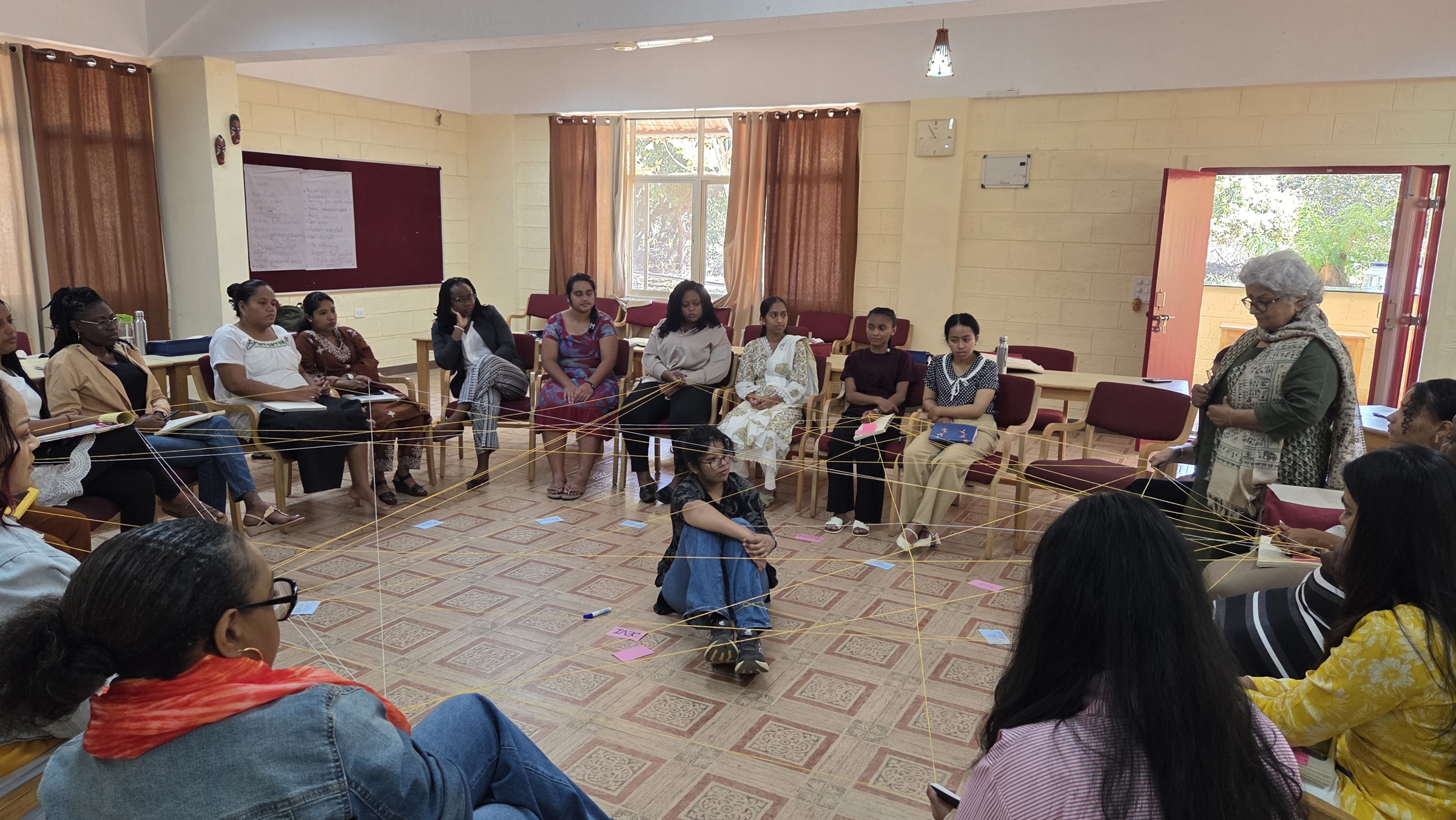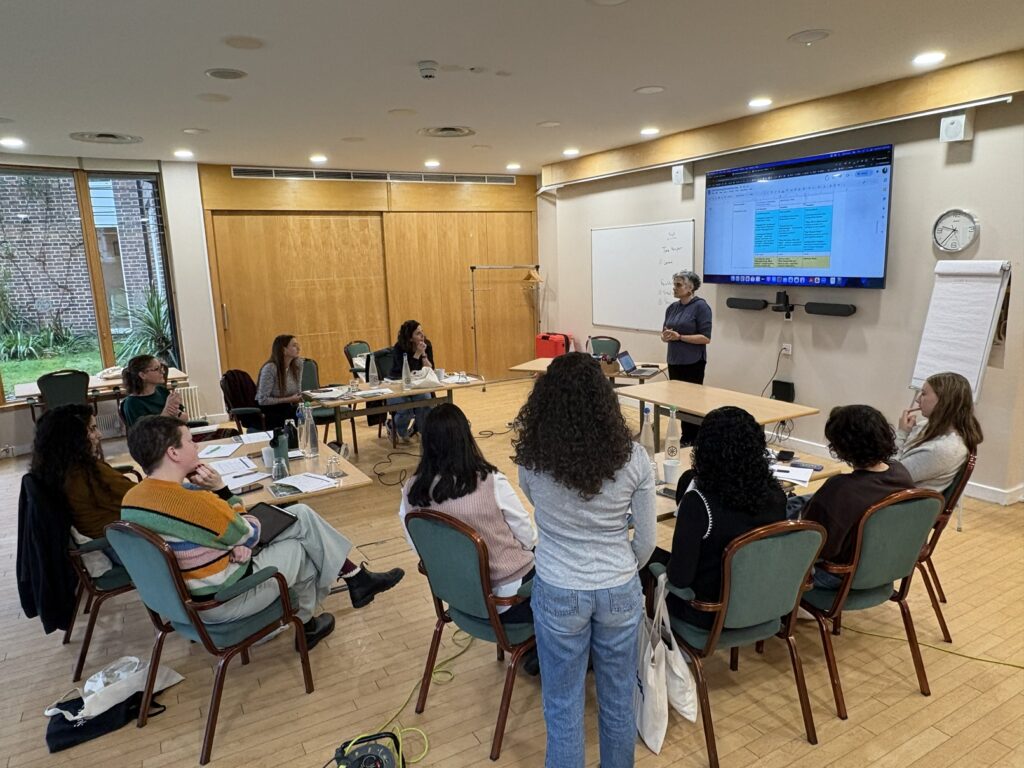
Ten women gathered in London, United Kingdom, from 6 to 9 February for a Life-Flourishing Spiritualities Workshop.
The three-day workshop formed part of CWM’s growing commitment to support Palestinians through humanitarian aid and active involvement in its programmes, reflected in the participation of Palestinian theologians.
The workshop sought to frame womanist liberation theology within the Palestinian context by reimagining liberation theology through embodied, communal, and gender-conscious lenses. It invited womanist theologians to bear witness to the God of Life in times of genocide. It also marked the first in-person gathering of Palestinian women engaged in liberation theology.
“Palestinian liberation theology is currently undergoing a renewal, with an emerging younger generation committed to the [future of the] land in the face of settler colonialism,” the CWM programme team behind the workshop explained. The event underscored the urgent need to search for a new politicised and contextualised Palestinian liberation theology that can respond powerfully to the 21st century questions posed by ruthless settler colonialism, wanton genocide, and the rise of Zionism in all its forms, including Christian Zionism.
Commending the workshop as one that aligned with the Transformative Ecumenism Movement and its commitment to doing mission from the margins, Yasmine Rishmawi, a Palestinian theologian, said, “I think this is an important space for Palestinian women theologians to be in and to collaborate with one another in the furtherance of ‘grassroots theology’.”
Building on the groundwork laid in Theology After Gaza, published last year under CWM’s Discernment and Radical Engagement (DARE) programme, the workshop continued to cultivate a theological response to the devastation in Gaza while calling the global church to moral, political, and spiritual accountability.
Despite its brevity, the workshop provided a timely space for young Palestinian womanist liberation theologians to develop and unify their collective voice through drafting a statement to be released at a later date.
Through deep dialogue, rigorous discussion, and shared truths and experiences, participants also addressed urgent questions of liberation, justice, and resistance from a womanist perspective.
Shadia Qubti, a member of the Palestinian diaspora who lamented the dearth of female perspectives on the Palestinian plight, praised the significance of the workshop: “We now have this opportunity to elevate our voices and to share what God has been doing among women in our varied communities and churches.”