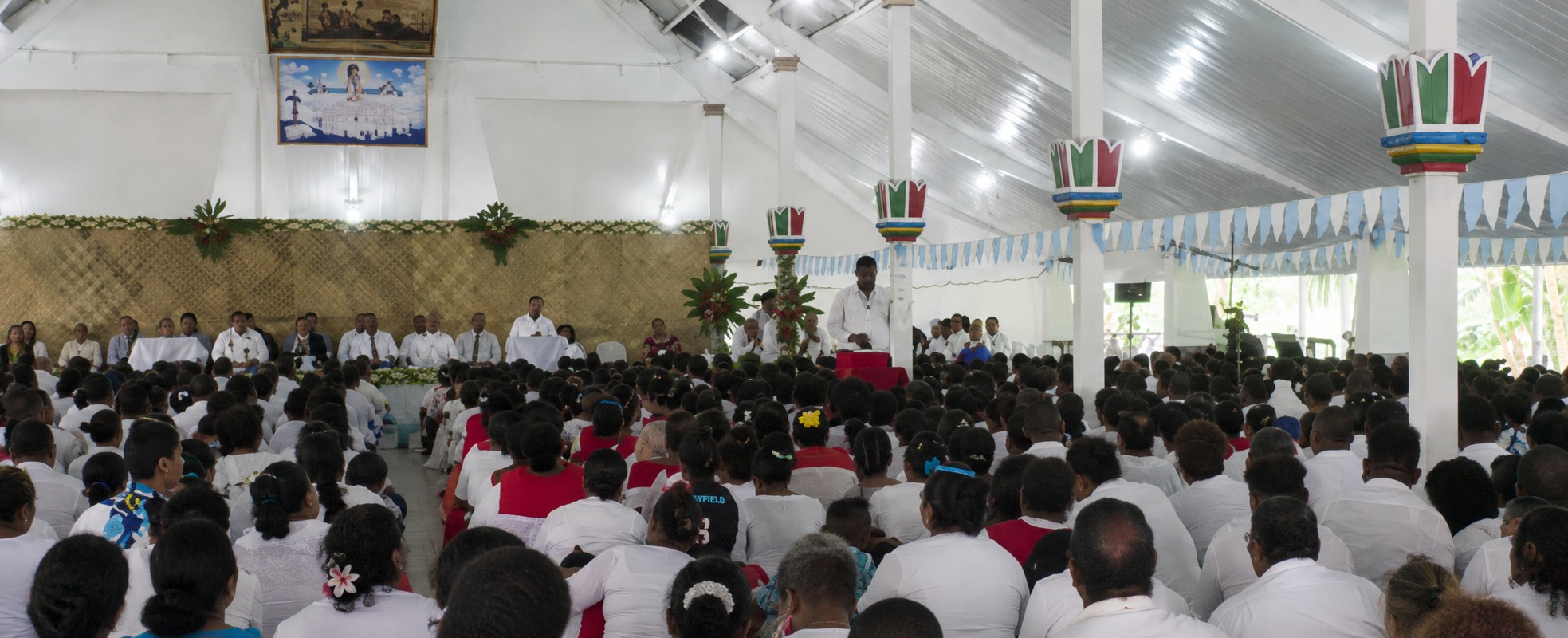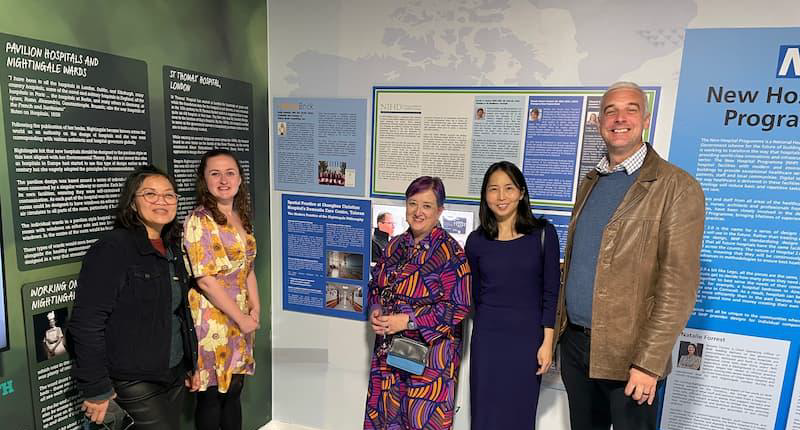
Changhua Christian Hospital (CCH), a medical institution founded in 1896 by Presbyterian missionaries in Taiwan, has been featured as a positive case study in the Healing Spaces exhibition at the Florence Nightingale Museum in London.
The exhibition opened on 18 November last year and is scheduled to run until 31 December 2026.
Managed by the Presbyterian Church in Taiwan (PCT), CCH stands as a testament to Christian medical evangelism, combining ministry with state-of-the-art healthcare delivery.
Several of CCH’s key mission partners attended the exhibition’s opening, including Rev. Dr Graham McGeoch and Rev. Dr Amelia Koh-Butler from the Council for World Mission (CWM) where McGeoch serves as mission secretary for discipleship and dialogue, while Koh-Butler oversees education and empowerment.
Having visited CCH in 2023, both spoke positively about its ethos and approach.
McGeoch described the hospital’s inclusion in the exhibition as a significant milestone, noting that it placed Taiwan’s specialised medical expertise firmly on the international stage.
Reflecting on the exhibition, Koh-Butler said, “It was so encouraging to see the health and healing stories of PCT being told in the Florence Nightingale Museum exhibition. Having been to the Healing Space in Taiwan, it was great to reflect on the real impact mission has made to physical and spiritual life-flourishing.”
A focus on aged and dementia care
Curated by an interdisciplinary team of healthcare professionals and historians, Healing Spaces adopts a case-study approach to examine key developments in healthcare environment design that are often overlooked by the public.
CCH was selected as one of two Taiwanese case studies for its innovative spatial solutions addressing the challenges of an ageing population and dementia care.
Drawing on Florence Nightingale’s principle that the medical environment itself forms part of the treatment, the hospital has designed its dementia ward to balance practical functionality with restorative rest and a sense of sanctuary for elderly and dementia patients.
The design, which was adopted in 2015, incorporates elements of reminiscence therapy, using familiar objects and scenes to create a reassuring environment. According to the hospital, these measures have helped to reduce patient anxiety, stabilise psychological wellbeing, and slow the progression of dementia.