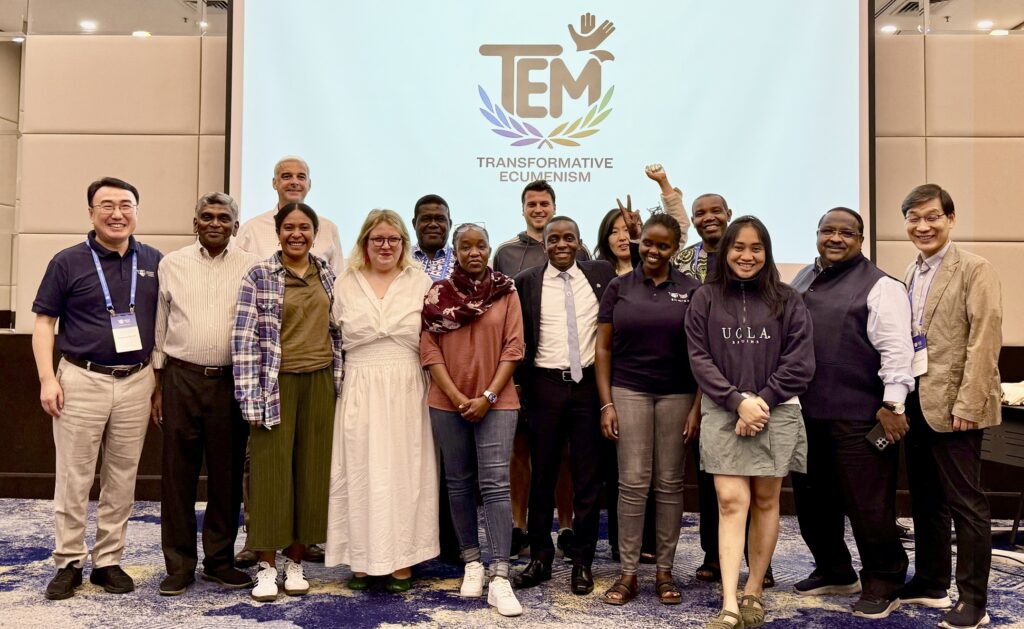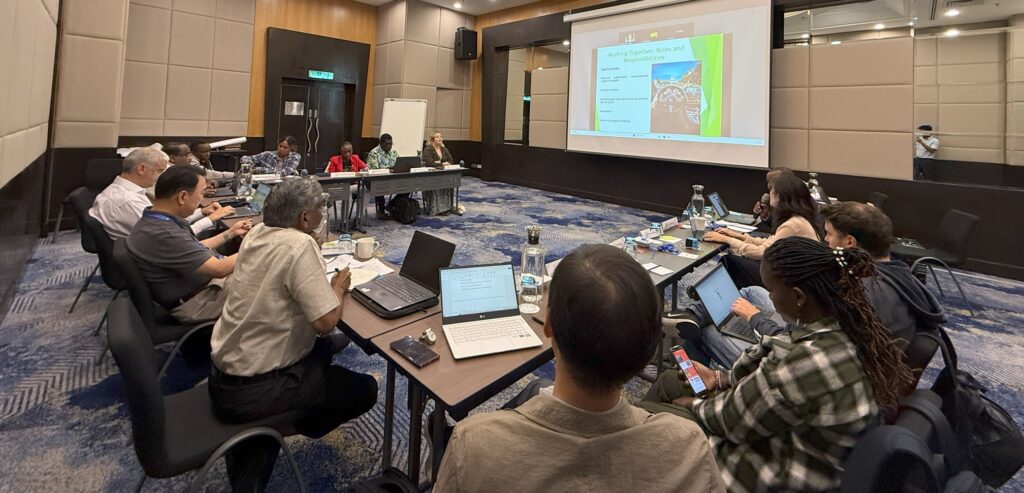
Planning for major growth of Transformative Ecumenism from a theological concept into a global movement, a steering group met in Kuala Lumpur, Malaysia, from 21-24 August to discuss a detailed strategy for elevating the nascent movement.
The 16-member steering group comprises ecumenical leaders and youth from across the world to plan, reflect, and concretise actions for justice, peace, and life-affirming Christian witness.
Drawing up plans with a strategic eye towards current global contexts and guided by Council for World Mission (CWM) General Secretary, Rev. Dr Jooseop Keum’s keynote on “Transforming Power in Catastrophic Times,” the meeting saw the leadership reaffirming the Transformative Ecumenism Movement’s (TEM’s) core identity as a people-led, justice-driven movement rooted in the margins.
“Transformative Ecumenism is not merely a theological idea; it is a call to action, rooted in the margins and led by young people. We are proud to support this movement as it seeks to embody justice and the need to ‘rise to life’ in every context,” said Keum.
The four-day meeting also gave increased clarity in matters that would lead to the movement’s future, sustainability, and cadence.
Members found themselves in unanimity concerning TEM’s future goals, including a renewed and increased commitment to youth leadership, positioning TEM as a youth-led movement. They also signalled a dedication towards theological resource development, and a desire for grassroots mobilisation.
Thematic priorities that included global issues and crises such as climate justice, gender justice, and solidarity with Palestine were identified as vital milestones for the strategic roadmap for 2025–2027. The roadmap also included elements such as a TEM website, the creation of a social media presence, and the planning for future regional youth gatherings.
CWM Deputy General Secretary for Programmes, Dr Sudipta Singh, chimed in on the significance of the meeting, “[Through the meeting], Transformative Ecumenism [has now] evolved as a ‘movement of movements,’ engaging with the grassroots struggles while maintaining theological coherence and strategic focus to address the issues people face.”
The group also unveiled bigger plans that would put TEM onto the greater church map with deliberations being made to produce a TEM publication by October 2025, with editorial contributions from members of the steering group.
Additionally, planning is underway for both a regional theological consultation in 2026 and the creation of study resources in partnership with All Africa Conference of Churches (AACC) and the Centre for Ecumenical Studies.
As a step towards the commitment to strengthening youth engagement, the steering group has agreed to organising regional meetings, such as an in-person youth steering group gathering in 2026, and a Global Youth Meeting in the following year.
TEM will also be promoted and placed on the agenda of major ecumenical events including the AACC Theological Symposium, Youth Congress, and the World Communion of Reformed Churches (WCRC) General Council in October.
Meanwhile, a dedicated communications team will be established to coordinate content production and dissemination across regions while continued mapping of grassroots movements and potential partners aligned with TEM’s vision and values will also be undertaken.
Commenting on the exciting crossroads that TEM has found itself in, Samuel Munayer, a Palestine theologian, and member of the steering group observed, “Ecumenism becomes authentic and transformative only when it is forged in costly solidarity with the oppressed; all other expressions remain shallow. In Malaysia, there is a refreshing sense that the Steering Group on Transformative Ecumenism is seeking to incarnate Christ’s prayer in our own time.”