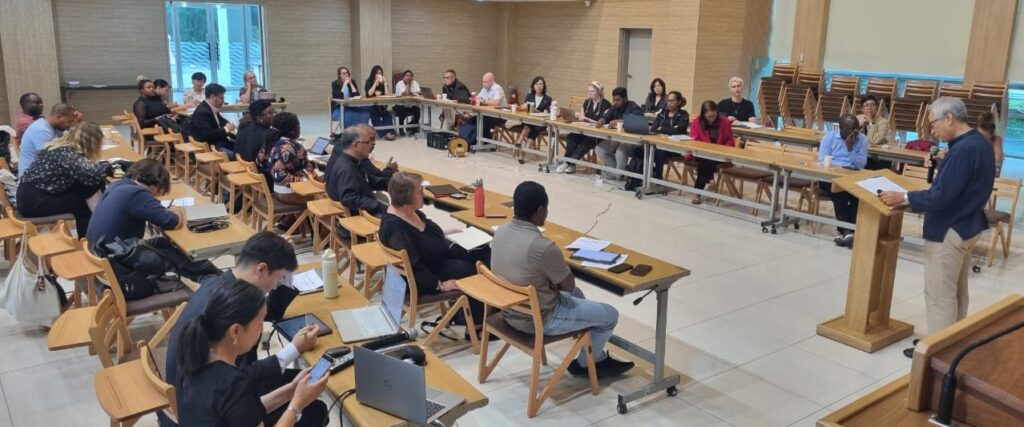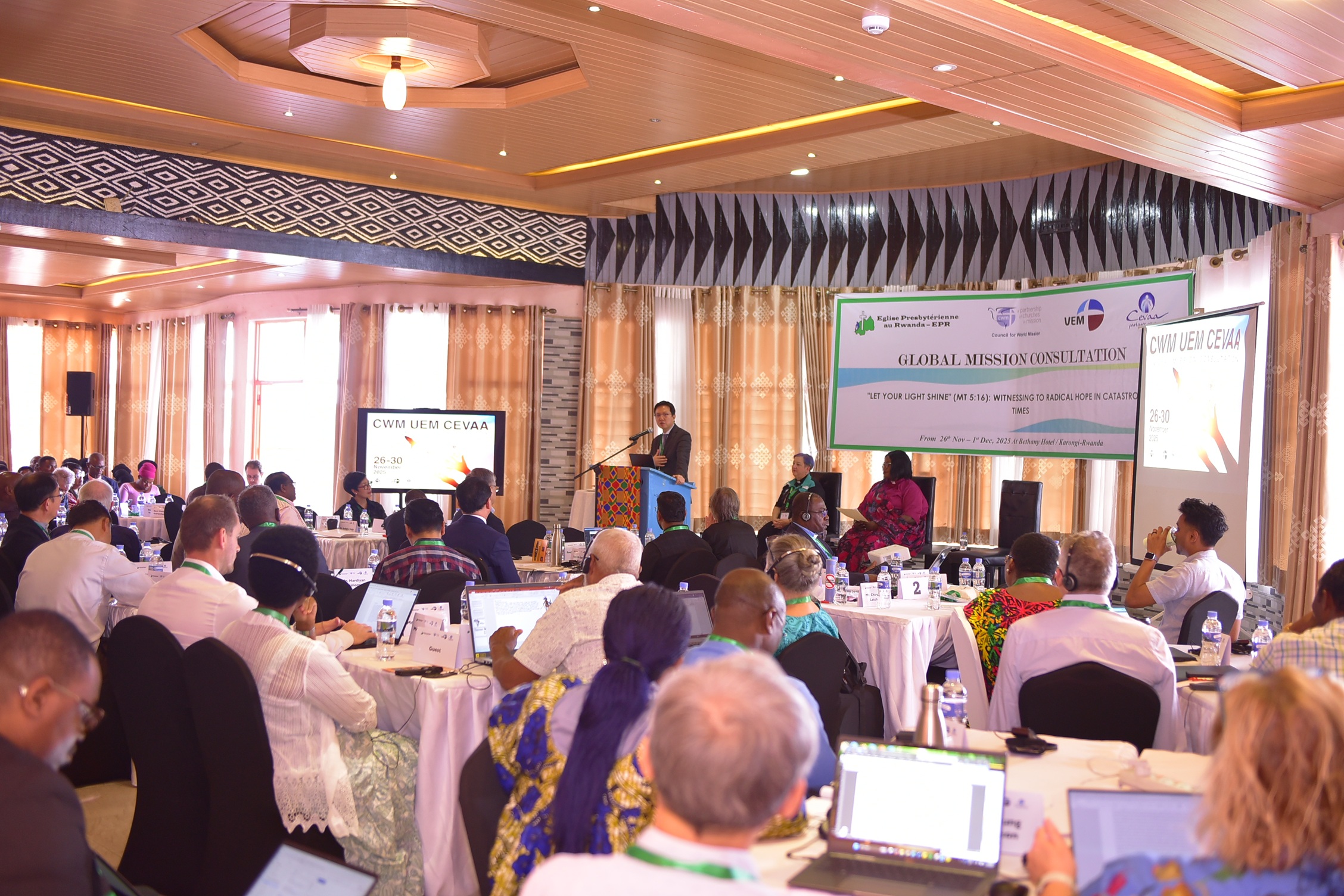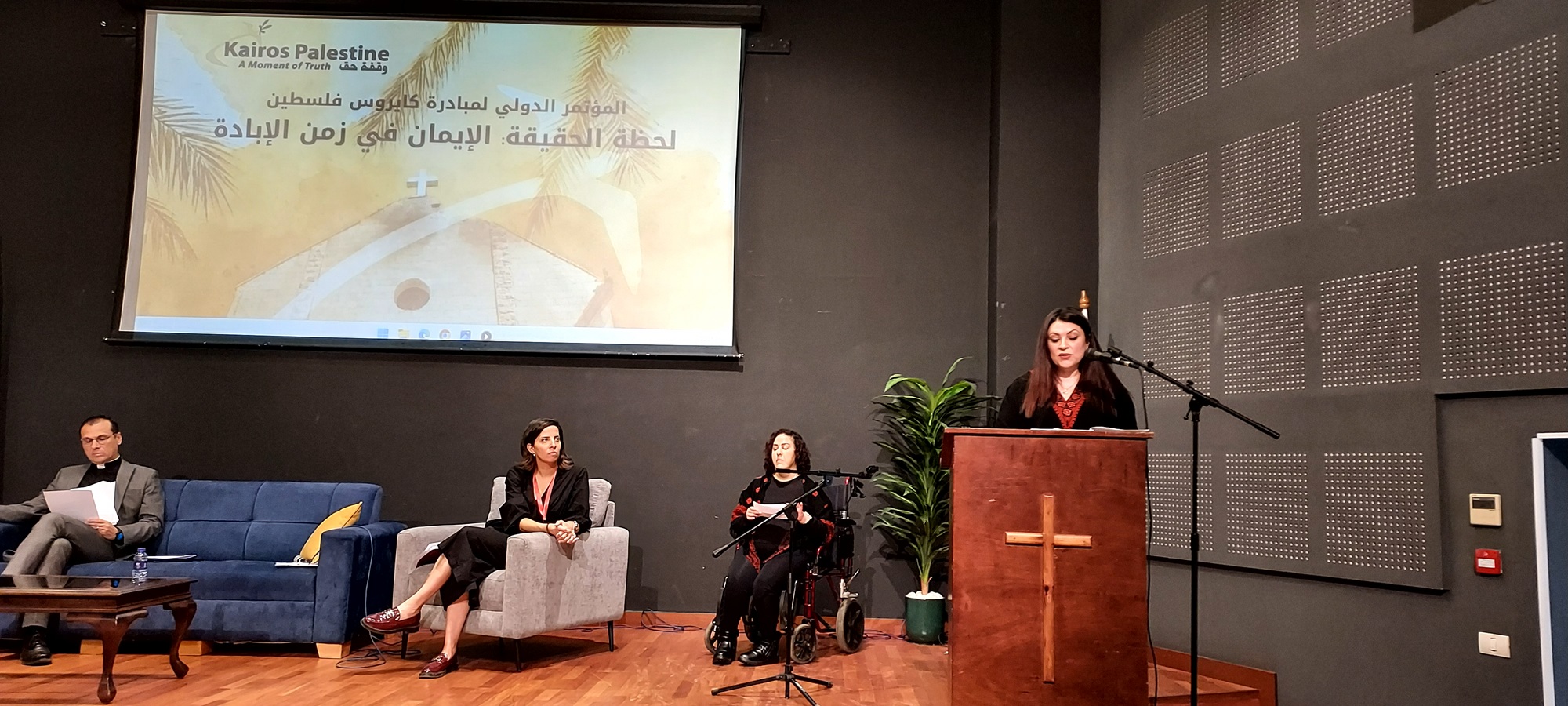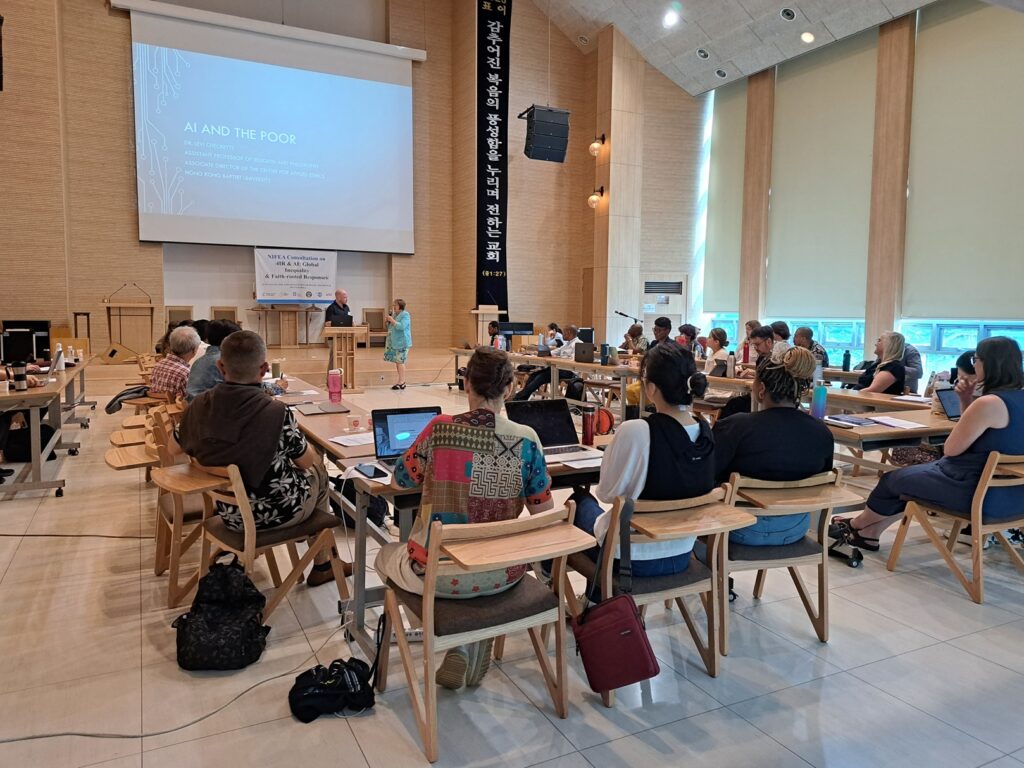
The Council for World Mission (CWM) came alongside its partners from the World Council of Churches, World Communion of Reformed Churches, Lutheran World Federation, World Methodist Council, and United Society Partners in the Gospel from 27-29 August in Pocheon, South Korea, for a New International and Financial Architecture (NIFEA) Consultation on the Fourth Industrial Revolution and AI.
NIFEA is a collective of faith-based communities committed to a just economic and financial architecture alternative to current global regimes.
The event drew 45 delegates—including theologians, church leaders, and youth and justice advocates—to critically examine how emerging technologies intersect with global inequality.
The consultation also amplified the voices of young people and communities from the Global South—people most vulnerable to the disruptions of the Fourth Industrial Revolution—ensuring that theological reflection was rooted in lived experience and struggles for justice.
An important milestone of the event was the affirmation of Christian mission as one that interrogates not only colonial histories but also provides spiritual checks on algorithmic futures.
Faith that demands resistance
“The Fourth Industrial Revolution is not arriving on neutral ground. It lands on soil already scarred by slavery, colonialism, and ecological destruction,” warned Rev. Daimon Mkandawire, CWM Mission Secretary for Ecology and Economy, as he addressed the gathered delegates.
Mkandawire further sounded the call for caution towards the rise of AI, raising the point that the global technological phenomena that also included the increased use of algorithms as not merely a technical one; but a potential theological crisis.
“If algorithms are coded to serve empire and profit, they will deepen the wounds of inequality, turning workers into disposable data points and creation into an extractive machine,” said Mkandawire.
However, he added, the church must base its discernment of the situation on the Gospel, as it continues to resist the injustices in the wake of AI.
Affirming the CWM mission as one that nurtures the creation of life-flourishing communities and economy even in the age of AI, Mkandawire reminded the consultation that the Christian faith compels the church to disrupt empire whilst the Holy Spirit calls for the re-imagining of economies of care, technologies of solidarity, and communities where dignity is not automated away but affirmed as the image of God.
Unified ecumenical uprising is in order
The consultation concluded with an outpouring of prayerful discernment and a prophetic spirit of urgency.
Participants collectively affirmed that AI and the Fourth Industrial Revolution cannot be left to governments and corporations alone; and their rise are a matter of faith, justice, and discipleship.
A powerful commitment was made amongst the delegations to stand together as a global communion of churches, insisting that technological futures must be shaped by values of equity, ecological sustainability, and human dignity.
The closing liturgy of the consultation further reminded the gathered members to “test the spirits” of rising technologies and to proclaim the possibility of another world—one where creation is healed and communities flourish beyond empire’s algorithms.
Rev. Namelia Lutchman of the Presbyterian Church of Trinidad and Tobago—a new member of the CWM global family of churches—emphasised the importance of a united church front: “Our time to act is now, as an ecumenical community, to resist technologies that commodify humanity and creation, and to reimagine digital futures shaped by justice, solidarity, and the flourishing of all God’s creation!” she said.
“In a world increasingly driven by algorithms, surveillance capitalism, economic injustice, and ecological destruction, the church must act as a beacon of hope and transforming power.”
Click here to read the full theological communique and action plan released at the closing of the consultation.