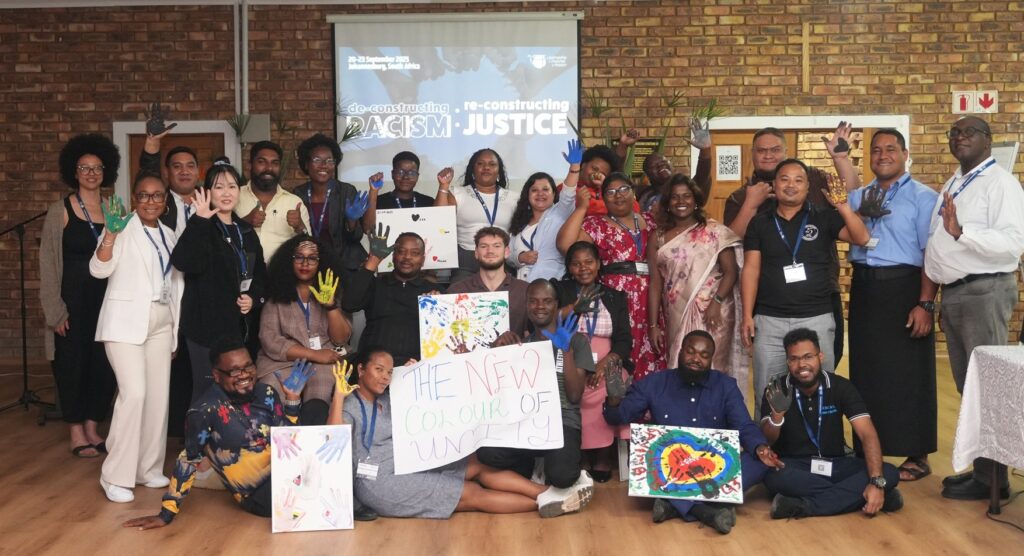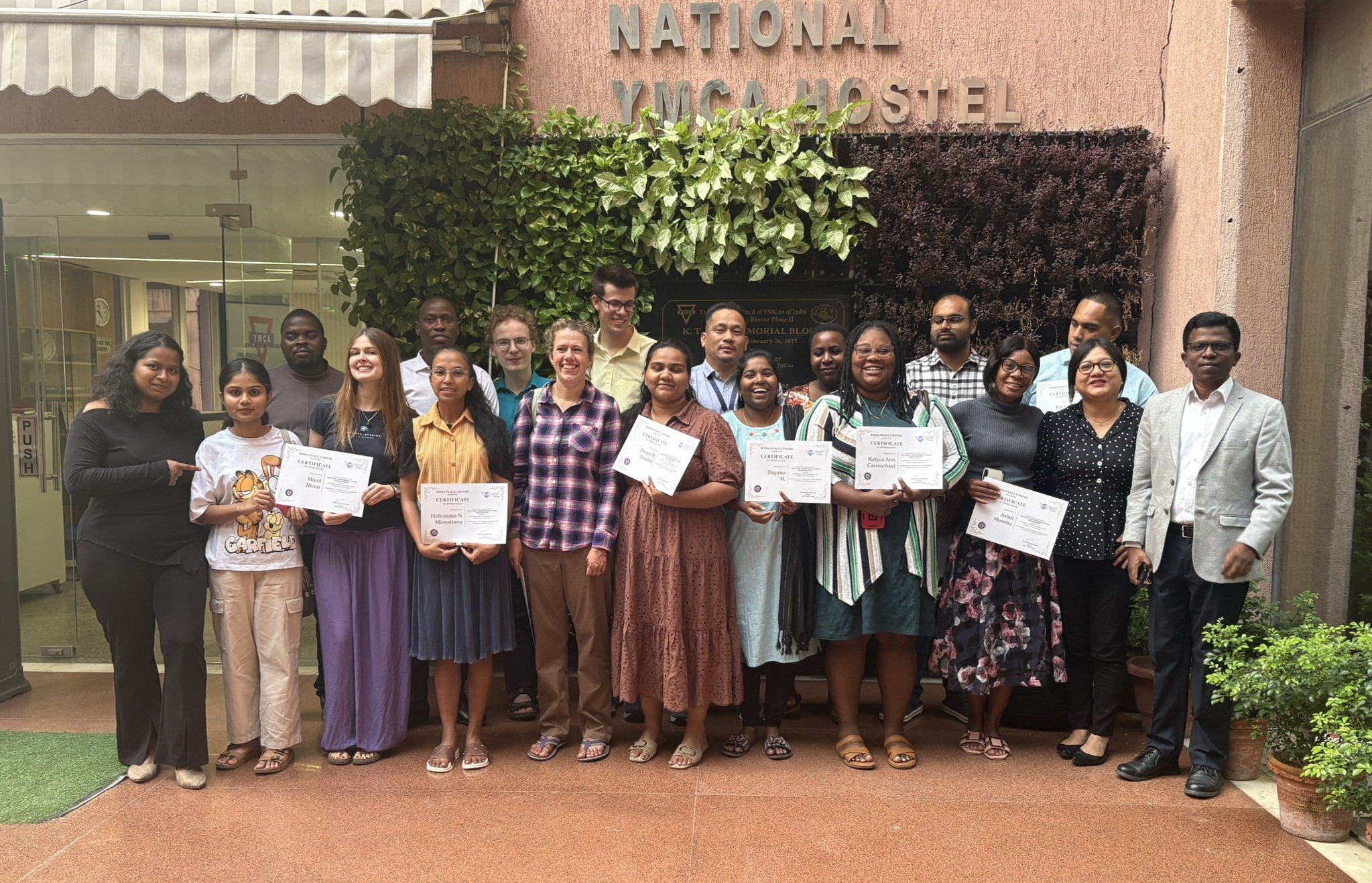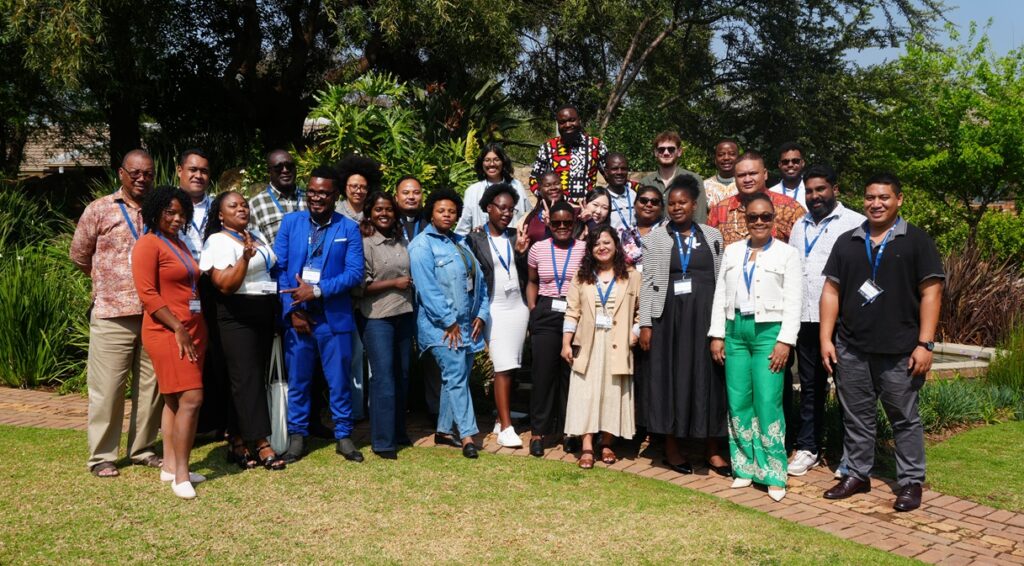
The Council for World Mission (CWM) brought together 23 young church leaders from across its global member churches for a transformative four-day programme, “Deconstructing Racism: Reconstructing Justice.” Participants committed themselves to resisting systemic racism and advancing justice through theology, storytelling, and lived praxis.
Held 20–23 September at the eMseni Christian Centre in Gauteng, Johannesburg, the gathering created a sacred space for reflection, dialogue, and action. Through contextual Bible studies, immersive experiences, and prophetic sessions, participants grappled with the realities of racial injustice while envisioning a world rooted in God’s love and justice.
CWM Mission Secretary for Social Justice Janet McConnell described the event as a moment of selah—a biblical pause for deep listening. She highlighted the storytelling sessions as a powerful element of the programme, noting that the narratives shared were not only sacred but also revealed shared struggles and hopes.
Through corporate worship, contextual Bible studies, and mutual storytelling and sharing, over the four days, the youth participants were challenged to confront the realities of racism and envision a more just world while being exposed to the simple truth that when pulpits and sanctuaries remain silent about racism, they are not just neutral but complicit.
Participants visited the Apartheid Museum and Constitutional Hill where they reached a deeper understanding of South Africa’s racial history and its inspired public acts of racial harmony.
The Ubuntu Circle, led by CWM Mission Secretary for Ecology and Economy Rev. Damon Mkandawire, became a defining moment of the programme.
Participants joined in a powerful moment of spirituality and symbolism, lighting candles around a campfire, sharing stories, writing experiences of racism, then burning them in the fire as an act of release and renewal, embodying the spirit of “Ubuntu” (I am because you are).
Participants pledged to return to their churches and communities as advocates for structural change, embodying anti-racist theology and fostering inclusive justice practices.